 Whatcom County
 Why Windows Fail Faster in Ferndale
Ferndale sits close enough to the water and the Nooksack lowlands that homes here take on a specific kind of weather stress: salt-tinged marine air, long stretches of driving rain off the water, and a wet, mossy shoulder season that can run from October into April. None of that is dramatic on any given day, but it's relentless, and older windows show it first. Aluminum frames pit and corrode. Wood sashes swell, stick, and eventually rot at the corners. Seals that were never rated for this much sustained moisture fail early, and once a seal fails, the window stops doing its one real job — keeping conditioned air in and weather out.
We work on homes across Whatcom County, and Ferndale properties tend to show the same pattern: single-pane or early dual-pane windows from the 80s and 90s that are drafty, foggy between the panes, and cold to the touch in winter. Energy-efficient replacement isn't a luxury upgrade here — it's a direct response to the climate the house actually sits in.
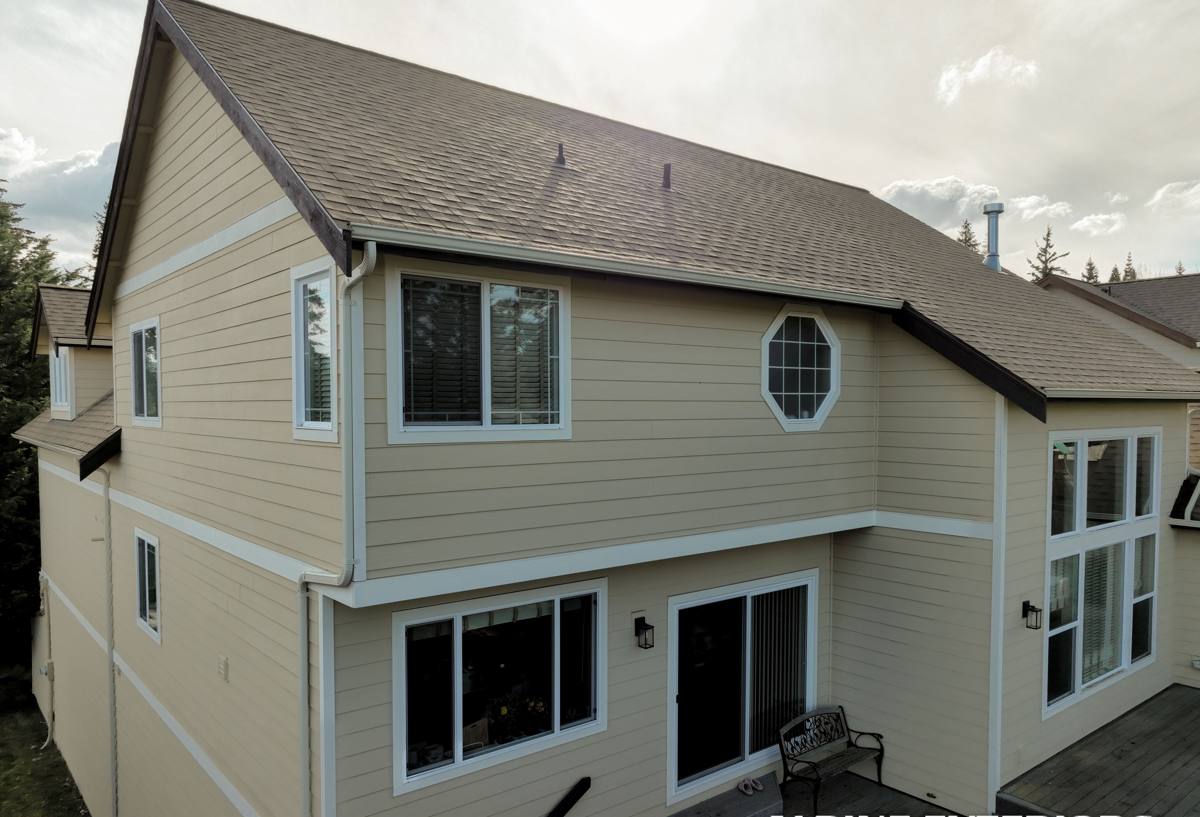
What "Energy-Efficient" Actually Means in This Climate
A lot of window marketing is written for hot, sunny climates where blocking solar heat gain is the main goal. That's not the priority in Whatcom County. Here, the numbers that matter most are:
- U-factor — how well the window resists heat loss. Lower is better, and it's the single most important number for our winters.
- Air infiltration rating — how much air leaks through the frame and sash under wind pressure, which matters a great deal during a driving rainstorm with gusts off the strait.
- Condensation resistance — how well the glass and frame resist interior fogging when it's cold outside and humid inside, a very common complaint in older Ferndale homes.
- Solar heat gain coefficient (SHGC) — useful, but a lower priority here than in a hot-climate market, since we're rarely fighting excess solar heat.
A window sold as "energy-efficient" without a strong U-factor and air infiltration rating for a marine climate is really just a warm-climate product wearing a general label. Part of our job is steering homeowners toward the ratings that actually apply to this part of Washington, not the ones printed biggest on the sticker.
Frame Materials: What Holds Up to Salt Air and Rain
Frame material matters as much as the glass package, especially this close to the water. Each option has real trade-offs, and we'll walk through them honestly rather than push whatever has the best margin.
| Frame Material | Moisture/Salt-Air Behavior | Maintenance | Typical Trade-Off |
|---|---|---|---|
| Vinyl | Won't corrode or rot; handles humidity well | Low — occasional cleaning | Can flex on very large openings; limited color/finish options |
| Fiberglass | Excellent — dimensionally stable, resists both moisture and salt exposure | Low | Higher upfront cost than vinyl |
| Wood (clad exterior) | Good if the exterior cladding is intact; interior wood still needs protection | Higher — cladding seams and interior finish need periodic attention | Best appearance for some homeowners; more upkeep near the coast |
| Aluminum | Poor without a thermal break; prone to pitting and corrosion in salt air over time | Moderate to high | Historically common but a poor fit for this climate without upgrades |
Our standard recommendation for Ferndale and the surrounding parts of Whatcom County is fiberglass or vinyl for most homes, specifically because neither one gives salt air or driving rain anything to work with over the long haul. We'll still install wood-clad where a homeowner wants that look, but we're upfront that it's a higher-maintenance choice this close to the coast.
Glass Packages: Double vs. Triple Pane
Dual-pane, low-E, argon-filled glass is the practical baseline for this climate and covers the vast majority of Ferndale homes well. Triple-pane adds real value in a few situations — a north-facing wall that never gets sun, a home right on a wind corridor, or a homeowner specifically chasing the lowest possible U-factor — but it adds weight, cost, and isn't always necessary to solve the draft and condensation problems most people are calling about. We'll tell you plainly when triple-pane is worth it and when dual-pane low-E gets the job done for less money.
What a Correct Installation Actually Involves
The window unit itself is maybe half the job. The other half — the part that determines whether the house stays dry for the next 20 years — is how the opening is prepped and flashed. This is where a lot of window problems actually start, and it's also where a contractor who does exterior work day in and day out has an advantage over a install-only crew.
- Remove the old unit and inspect the rough opening for hidden rot, especially at the sill, before anything new goes in.
- Install a proper sill pan to direct any incidental water back out, not into the wall cavity.
- Integrate window flashing correctly with the existing weather-resistive barrier — lapped so water sheds downward and outward, never trapped behind the siding.
- Set the unit plumb, level, and square, then shim and fasten per the manufacturer's structural requirements.
- Seal and insulate the gap between frame and rough opening with a material that stays flexible, not just spray foam packed in and forgotten.
- Finish the exterior trim and caulk lines so the whole assembly sheds driving rain rather than catching it.
Skip any one of these steps and you can end up with a window that's rated for great energy performance on paper but leaks or rots at the frame within a few wet seasons — which, in this part of Whatcom County, doesn't take long to show up.
Our Process for a Ferndale Window Project
1. On-Site Assessment
We look at each opening individually — not just the glass, but the condition of the framing, the existing flashing, and any signs of past water intrusion. Ferndale homes vary in age and construction enough that a one-size answer doesn't work.
2. Product Selection
We walk through frame material, glass package, and grid/style options based on your home's exposure (a wall that takes direct weather off the water gets a different recommendation than a sheltered side), your budget, and how long you plan to stay in the house.
3. Installation
Old units come out, openings get inspected and repaired as needed, and new windows go in with full flashing integration — not just caulked into the existing opening.
4. Cleanup and Walkthrough
We clear debris, check that every unit operates and locks properly, and walk the exterior with you so you know what was done and why.
Signs Your Current Windows Are Already Failing
Homeowners often wait longer than they should because the signs are gradual. Watch for:
- Fogging or a milky haze between the panes — a sign the seal has failed and the insulating gas is gone
- Noticeable drafts near the frame, especially during wind-driven storms
- Condensation or moisture buildup on interior glass or sills through the wet season
- Visible moss, algae, or dark staining on exterior sills and trim
- Difficulty opening, closing, or locking sashes — often a sign of frame swelling or settling
- Higher heating bills without a clear other cause
Any one of these on its own isn't an emergency, but a window showing two or three of them has usually stopped doing its job.
What Drives the Cost
| Factor | Why It Matters |
|---|---|
| Frame material | Vinyl is typically the most economical; fiberglass and wood-clad cost more upfront |
| Glass package | Dual-pane low-E is standard; triple-pane and specialty coatings add cost |
| Opening condition | Hidden rot or out-of-square framing found during removal adds repair time |
| Size and access | Large units, upper stories, or tight access affect labor |
| Installation type | Full-frame replacement (with new flashing) costs more than insert replacement but performs better long-term |
Whole-house window replacement generally runs from several hundred to a few thousand dollars per window installed, with the total depending heavily on the factors above. We give a firm, itemized number after we've actually looked at your openings — not a phone-quote guess.
Choosing a Window Contractor in Ferndale
Whatcom County has no shortage of window sellers, but installation quality varies a lot more than the glass specs do. Before hiring anyone, it's worth asking:
- Do they carry current Washington state contractor licensing and liability insurance?
- Will they explain their flashing and sill-pan method, not just the window brand?
- Do they inspect the rough opening before quoting a firm price, or just measure from outside?
- What's the warranty structure — on the product, and separately on their labor?
- Can they speak specifically to salt-air and moisture exposure, or do they give the same pitch everywhere?
A contractor who can't answer the flashing and sill-pan question clearly is telling you something important about how the rest of the job will go.
Why a Crew That Already Works Ferndale Matters
Window performance in Whatcom County isn't theoretical — it's tested every wet season by the same combination of salt air, driving rain, and moss that's been wearing on local homes for decades. A crew that installs windows across Ferndale and the surrounding county regularly knows which walls take the worst weather, which older homes tend to have hidden sill rot, and which installation shortcuts show up as callbacks two winters later. That local pattern recognition is worth more than a manufacturer's brochure.
If your windows are drafty, fogged, or just old enough that you're wondering, we're happy to take a look and give you an honest read on what's actually needed. Reach out for a free, no-pressure estimate using the form below.