 Whatcom County
 Why Decks in Fairhaven Wear Out Faster Than the Manufacturer's Chart Says
Every deck board and hardware package sold at a lumberyard comes with a service-life estimate based on average conditions somewhere in the middle of the country. Fairhaven isn't average. Sitting along Bellingham Bay, homes here deal with a near-constant mix of salt-laden air, wind-driven rain, and long stretches of gray, damp weather that can run from October well into spring. That combination is hard on a deck in ways that don't show up in a showroom.
Salt air accelerates corrosion in fasteners, joist hangers, and any exposed metal connectors. Driving rain doesn't just fall straight down — it gets pushed sideways into ledger boards, under flashing, and into end grain that was never sealed properly. And Whatcom County's moss season, which can stretch for months, turns any shaded or poorly drained deck surface into a slick, moisture-holding mat that traps water against the wood or composite decking long after a storm has passed.
None of this means a deck in Fairhaven is doomed. It means the materials, fasteners, flashing details, and drainage plan all have to be chosen and installed with this specific climate in mind — not generic "deck building" practices pulled from a national how-to guide.
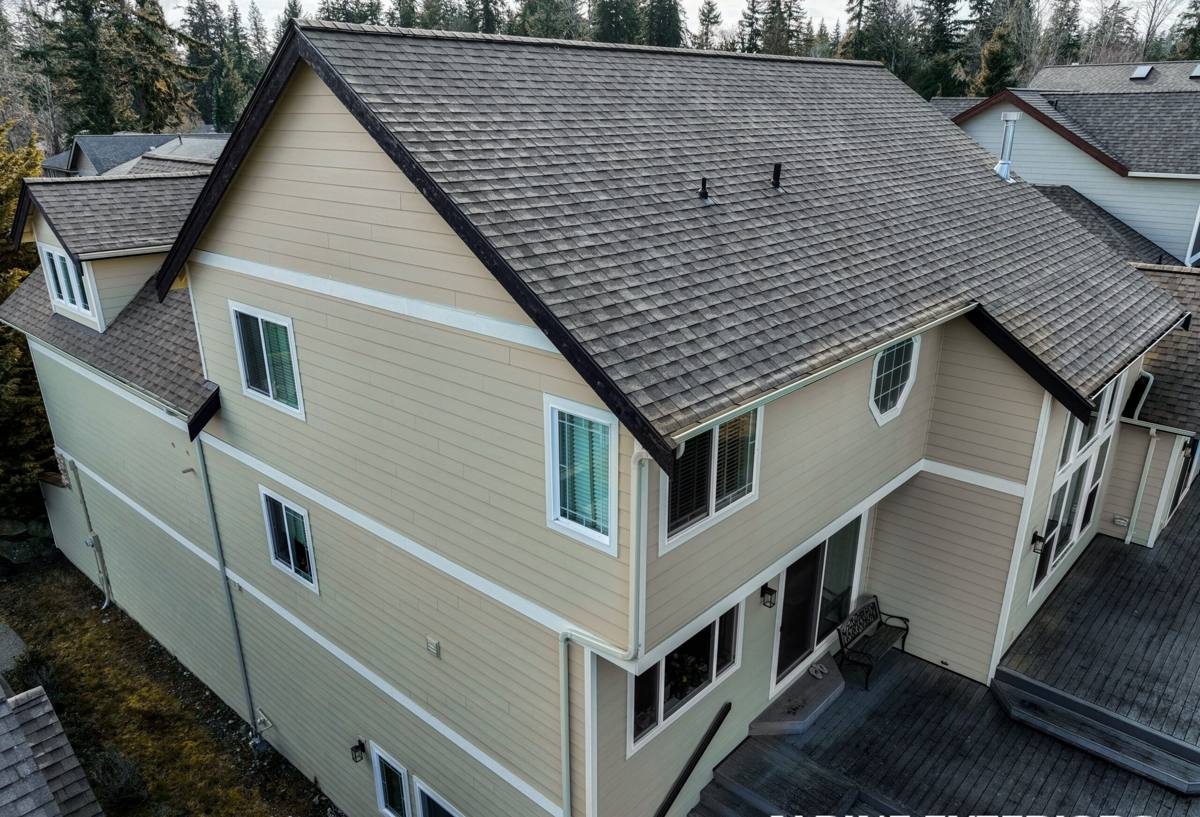
Signs a Deck Needs Replacing, Not Just Repairing
Homeowners often call us assuming they need a repair, and sometimes that's true. But there's a point where patching individual boards or re-securing a railing is just delaying a full rebuild — and spending money that won't carry forward into the replacement. Here's how we tell the difference on a typical visit.
- Soft, spongy, or discolored spots in the decking that go beyond the surface when pressed
- Rust streaking or corrosion around fasteners, especially near the ledger board or stair stringers
- Visible gaps or rot where the deck ledger meets the house — a common failure point in wet climates
- Persistent moss or algae growth that returns within weeks of cleaning
- Structural movement or bounce when walking across the deck, particularly near the rim joist
- Posts or footings that show cracking, heaving, or separation from the concrete
If the problems are limited to a few boards and the substructure is sound, repair makes sense. If the framing, ledger connection, or footings are compromised, a repair is just cosmetic — the deck needs to come off and be rebuilt correctly from the ground up.
Choosing Materials for a Fairhaven Deck
There's no single "best" decking material — there's a best material for this climate, this budget, and how the deck will actually be used. We walk every homeowner through the real trade-offs instead of pushing whatever has the highest margin.
| Material | How It Handles Salt Air & Rain | Moss/Algae Behavior | Maintenance |
|---|---|---|---|
| Pressure-treated wood | Good if properly sealed and re-sealed on schedule; end grain is the weak point | Prone to moss if not cleaned regularly, especially in shaded areas | Annual cleaning and re-sealing recommended |
| Cedar | Naturally rot-resistant but still needs sealing near the coast; softer surface | Similar moss risk to treated wood if left unmaintained | Sealing every 1-2 years for appearance and protection |
| Composite decking | Handles moisture and salt exposure well; no end-grain rot risk | Lower moss adhesion on textured/capped boards, but still needs periodic cleaning | Occasional washing; no sealing or staining |
| PVC decking | Excellent moisture and corrosion resistance; won't absorb water | Smooth surface sheds moss and algae more easily than wood | Lowest maintenance of the group |
We don't steer everyone toward composite or PVC just because they're lower maintenance — a lot of homeowners genuinely prefer the look and feel of real wood, and that's a legitimate choice as long as they understand the upkeep commitment that comes with it. What we do insist on, regardless of material, is correct fastener selection (stainless or coated hardware rated for coastal exposure) and proper flashing, because those two details fail before the decking itself usually does.
A Word on Cheaper Composite Products
Not all composite decking is built the same. Some older or budget-tier composite products absorb moisture at the core over time, which is a real problem in a climate that stays damp for months at a stretch. Our standard is to use capped composite or PVC products with a documented moisture warranty appropriate for coastal exposure — it costs a bit more up front, but it avoids the swelling and delamination issues that show up a few years in with lower-grade material.
What a Correct Deck Replacement Actually Involves
A deck replacement is more than pulling up old boards and screwing down new ones. Done correctly, especially in a wet, salt-exposed area like Fairhaven, it involves several layers that most homeowners never see once the project is finished.
Ledger Board and Flashing
The connection between the deck and the house is the single most common source of failure in this region. We install proper flashing — typically a metal drip cap paired with a waterproof membrane behind the ledger — so wind-driven rain can't work its way behind the board and into the house framing. This detail alone prevents most of the structural rot we find when we tear out old decks.
Footings and Posts
Footings need to be sized and set below frost depth and bear on undisturbed, well-draining soil. On sites with poor drainage or fill soil, which isn't unusual in parts of Whatcom County, we adjust footing design accordingly rather than using a one-size-fits-all approach.
Framing and Fasteners
Joists, beams, and hangers all need corrosion-resistant, code-rated hardware — this matters more here than in drier inland climates because salt air accelerates galvanic corrosion on lower-grade fasteners. We also space and orient framing to allow water to drain and air to circulate underneath, which directly reduces moss and mildew buildup.
Surface Drainage and Gapping
Board spacing and slope are set to move water off the deck surface quickly rather than letting it pool. Standing water is what turns a deck into a moss farm during the wetter months, so getting this detail right during construction saves a lot of maintenance headaches later.
Our Deck Replacement Process
1. On-Site Assessment
We start with a walkthrough of the existing deck, checking the ledger connection, framing, footings, and any visible rot or corrosion. This tells us honestly whether the site needs a full replacement or whether a repair is realistic.
2. Design and Material Selection
We talk through material options, budget, and how the deck will be used, then put together a straightforward scope and estimate — no vague allowances that turn into surprise costs later.
3. Permitting
Deck work often requires a permit through the local jurisdiction, particularly for anything involving structural framing, footings, or height above grade. We handle that process rather than leaving it on the homeowner's plate.
4. Tear-Out and Disposal
The old deck is removed, including old footings if they're undersized or in the wrong location, and the site is cleared and hauled off.
5. Framing, Flashing, and Build
New footings, framing, ledger flashing, and decking go in according to the design, with attention to the fastener and drainage details covered above.
6. Final Walkthrough
We walk the finished deck with the homeowner, check railings and stairs for solid attachment, and go over basic care specific to the material chosen.
Moss, Drainage, and Long-Term Care
Even a well-built deck needs some seasonal attention in a climate with a moss season this long. The good news is that most of it is simple, low-cost maintenance rather than anything technical.
- Sweep leaves and debris off the deck regularly through fall — trapped organic matter holds moisture and feeds moss growth
- Rinse the surface periodically during the wet months, especially in shaded areas that don't dry out between rains
- Keep gutters and downspouts near the deck clear so runoff isn't dumping directly onto the surface or framing
- Check railing posts and stair connections once a year for looseness, which shows up faster in areas with freeze-thaw cycles
- Re-seal wood decking on the schedule recommended for the product — skipping a cycle in this climate shortens lifespan noticeably
- Trim back vegetation that's shading the deck and keeping it damp longer than the rest of the yard
Permits and Local Considerations
Whatcom County and the City of Bellingham (which includes the Fairhaven neighborhood) have specific permitting and setback requirements for deck construction, particularly for elevated decks, stairs, and guardrails. Requirements can also vary depending on lot slope, proximity to the shoreline, and existing structures. Rather than guessing at what applies, we confirm the specifics for each property before finalizing a design, so there are no surprises partway through construction.
Why a Crew That Already Works in Fairhaven Makes a Difference
Deck construction manuals are written for generic conditions. A crew that regularly works in Fairhaven and the surrounding Whatcom County waterfront areas has already seen how salt exposure, driving rain, and moss actually play out on real decks over several years — not just in theory. That experience shows up in small decisions: which fastener grade to spec, how much slope to build into the decking, where flashing details get skipped on cheaper jobs and cause problems two winters later.
It also means we're not learning the local permitting process on your project, and we're not surprised by soil or drainage conditions common to the area. For a project that's exposed to the weather every single day for decades, that local track record matters more than it might for indoor work.
Cost Factors to Expect
Every deck is different, but a few factors consistently drive cost up or down: overall square footage, whether footings need to be replaced or can be reused, height above grade (which affects stair and railing complexity), material choice, and site access for equipment and material delivery. We provide a clear, itemized estimate before any work starts so homeowners can see exactly what's driving the number, rather than a single lump figure.
If your deck is showing signs of wear, or you're just not sure whether it needs repair or full replacement, we're happy to take a look and give you an honest read on it. Reach out for a free, no-pressure estimate using the form below.