 Whatcom County
 Building New in Happy Valley? The Windows Are Where Most Callbacks Start
Happy Valley sits close enough to the water and the weather patterns that come off Bellingham Bay that new construction here has to be built differently than a spec home going up somewhere inland. If you're framing a new house or an addition in this part of Whatcom County, the window openings are one of the few places on the job where a small mistake in month one turns into a rot repair in year five. We install new-construction windows for builders and homeowners in Happy Valley, and the work is almost always about getting the boring parts right: flashing sequence, sill pan drainage, and matching the window's performance rating to what this climate actually throws at a house.
New-construction windows are a different job than replacement windows, even though both end with a window in a wall. New-construction units have a nailing fin that gets integrated directly into the wall's water-resistive barrier before siding goes on. That gives you one real shot at doing it correctly — once the siding is up, the flashing details are buried. This page covers what that job actually involves for a Happy Valley build, not a generic overview of window shopping.
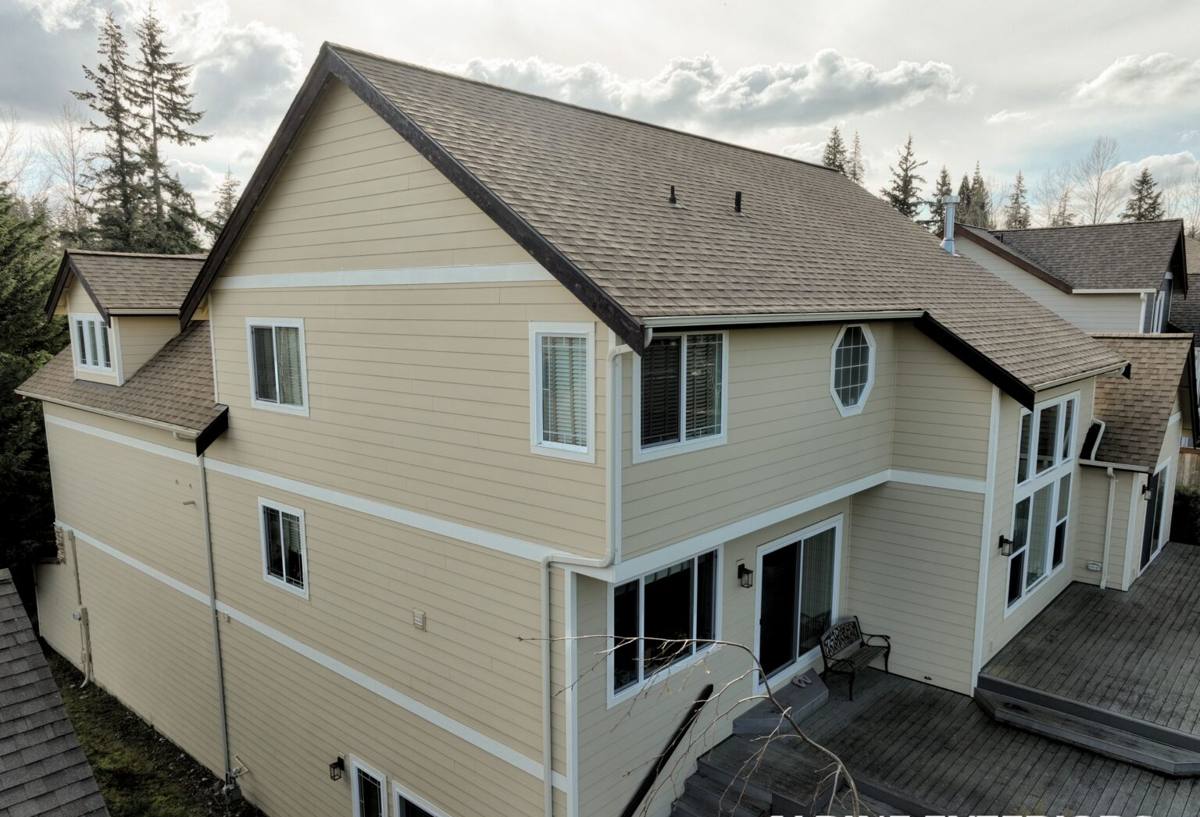
What Whatcom County Weather Does to a New Window Opening
Three things drive most of our decisions on a new-construction window install out here:
Salt Air
Homes closer to the water deal with airborne salt that accelerates corrosion on hardware, screws, and lower-grade metal flashing. It doesn't happen overnight, but over a decade it's the difference between fasteners that back out or corrode and ones that don't. We choose flashing tape, fasteners, and window hardware with that exposure in mind rather than defaulting to whatever is cheapest at the yard.
Driving Rain
Whatcom County doesn't just get rain, it gets wind-driven rain that hits window openings at an angle instead of falling straight down. A window that's watertight in a still-air test can still leak on a house here if the flashing doesn't shed water past the rough opening and down the wall plane correctly. This is the single biggest factor in how we sequence flashing on new construction.
Moss and Sustained Moisture Season
The long wet season that grows moss on roofs and north-facing siding also means window openings stay damp for months at a stretch, not days. Any water that gets trapped behind a window — from a bad sill pan, missing weep path, or sealant used in place of proper flashing — doesn't get a chance to dry out before more rain arrives. That's why we treat drainage, not sealant, as the primary defense.
What a Correct New-Construction Window Install Actually Involves
None of this is exotic. It's a sequence, and skipping a step is what causes problems, not using unusual materials.
- Rough opening checked for square, level, and correct dimension before the window ever shows up on site
- Sill pan flashing installed with a slight slope to the exterior so any water that gets in has somewhere to go
- Self-adhered flashing tape at the sill lapped correctly with the water-resistive barrier — water always laps over the layer below it, never under
- Window set, shimmed level and plumb, and fastened per the manufacturer's schedule — not "close enough"
- Jamb and head flashing integrated so water sheds outward and down, never inward toward the framing
- Backer rod and exterior sealant at the trim line, used as a second line of defense, not the only line of defense
- Interior air sealing at the rough opening so conditioned air and moisture-laden air don't move through the wall assembly
The most common shortcut we see on jobs we get called to fix later is sealant used instead of proper flashing lap — caulk covers a gap today but it's not a substitute for shedding water downward through the wall assembly. It fails quietly, usually behind the siding, and by the time it shows up as a stain or soft spot inside, the repair is bigger than the window.
Choosing the Right Window for a Happy Valley Build
Frame material and glass package both matter more here than in a drier, calmer climate. Vinyl is common and cost-effective, but the quality range within "vinyl" is wide — reinforced frames and quality corner welds hold up to wind and temperature swings much better than budget-grade vinyl. Fiberglass costs more but handles this region's freeze-thaw and moisture cycling with less long-term movement. Wood-clad windows look great and perform well, but the cladding has to be genuinely watertight at every seam, because wood behind a compromised clad joint is exactly the kind of slow, hidden damage that's expensive to catch early.
| Frame Type | Typical Cost Position | How It Handles This Climate |
|---|---|---|
| Vinyl | Lower to mid | Good performance from reinforced frames; quality varies a lot by manufacturer |
| Fiberglass | Mid to higher | Very stable through temperature and moisture cycling; low maintenance |
| Wood-clad | Higher | Strong appearance and performance if cladding seams stay fully sealed; more maintenance sensitivity |
| Aluminum | Varies | Durable but conducts cold and can condense more without a thermal break — worth confirming that spec |
Glass Packages and Condensation
Low-E, argon-filled double-pane glass is the practical standard for new construction in this climate — it manages heat loss and helps limit interior condensation on cold, damp mornings. Triple-pane is worth pricing out for north-facing rooms or if the build is aiming for a tighter overall energy profile, but it's not required everywhere. The U-factor and condensation resistance rating on the label matter more than a "triple vs. double" headline — we'll walk through the actual numbers for your project rather than sell on the pane count alone.
Our Process on a New-Construction Job
- Plan review and takeoff. We work from the window schedule and rough opening dimensions before anything ships, so sizing errors get caught on paper, not on site.
- Coordination with the builder's schedule. Windows go in after the wall's water-resistive barrier is up and before siding starts — we coordinate timing so the opening isn't exposed to weather longer than it needs to be.
- Flashing and set. Sill pan, tape, window set and fastened, jamb and head flashing — done in sequence, inspected before it's covered.
- Interior and exterior sealing. Air sealing inside, backer rod and sealant outside.
- Documentation. We can photograph flashing details before siding closes them in, which is useful for the builder's own records and for any future service call.
Why a Crew That Already Works Happy Valley Matters
New-construction window flashing isn't a place to learn a climate on the job. A crew that's already worked jobs across Whatcom County knows which flashing tapes hold up to this area's temperature swings, how much slope a sill pan needs given the amount of driving rain the area gets, and which corners get skipped by installers used to calmer, drier regions. We're not guessing at how a wall assembly performs here — we've seen what happens when it's done wrong and what it takes to do it right the first time.
We also know how new-construction schedules actually run — trades stacked tightly, weather windows that can close fast in the wet months, and the coordination it takes to get windows set without holding up siding or interior trades behind us.
Checklist: Questions Worth Asking Before Windows Go In
- Is sill pan flashing included, or is the plan to rely on sealant alone?
- What's the flashing lap sequence, and can it be shown before siding covers it?
- What U-factor and condensation resistance rating is specified for this project, and does it fit a Whatcom County winter?
- Is the fastener and hardware spec appropriate for a site with salt air exposure?
- Who's responsible for air sealing the rough opening on the interior side?
A Straightforward Note on Cost
New-construction window pricing depends on unit count, frame material, glass package, and opening sizes — there's no honest flat number to quote without seeing the plans. What we can tell you up front is that spending a bit more on frame quality and flashing materials on the front end is almost always cheaper than a moisture repair five or ten years in. We'll give you a clear, itemized number once we've reviewed the window schedule, not a rough guess that changes later.
If you're building in Happy Valley or elsewhere in Whatcom County, we're happy to walk your plans, talk through window options, and give you a free, no-pressure estimate — just fill out the form below.