 Whatcom County
 Roofing in Nooksack: What the Climate Actually Demands
Nooksack sits in the Whatcom County corridor where marine air off the Sound meets the foothills, and that combination is hard on a roof. Homes here deal with long stretches of driving rain, damp salt-laden air that never fully dries out between storms, and a moss and algae season that can run eight or nine months out of the year. None of that is exotic — it's just Whatcom County weather doing what it does — but it means a roof that would be fine in a drier climate can fail early here if it wasn't built for these conditions from the start.
An asphalt shingle roof is not a "set it and forget it" system in this part of the state. It's a system of layers — underlayment, flashing, ventilation, and the shingles themselves — that all have to work together to keep moisture moving out instead of soaking in. When one layer is done wrong or skipped to save time, the roof can look fine from the ground for a year or two and still be losing the fight underneath.
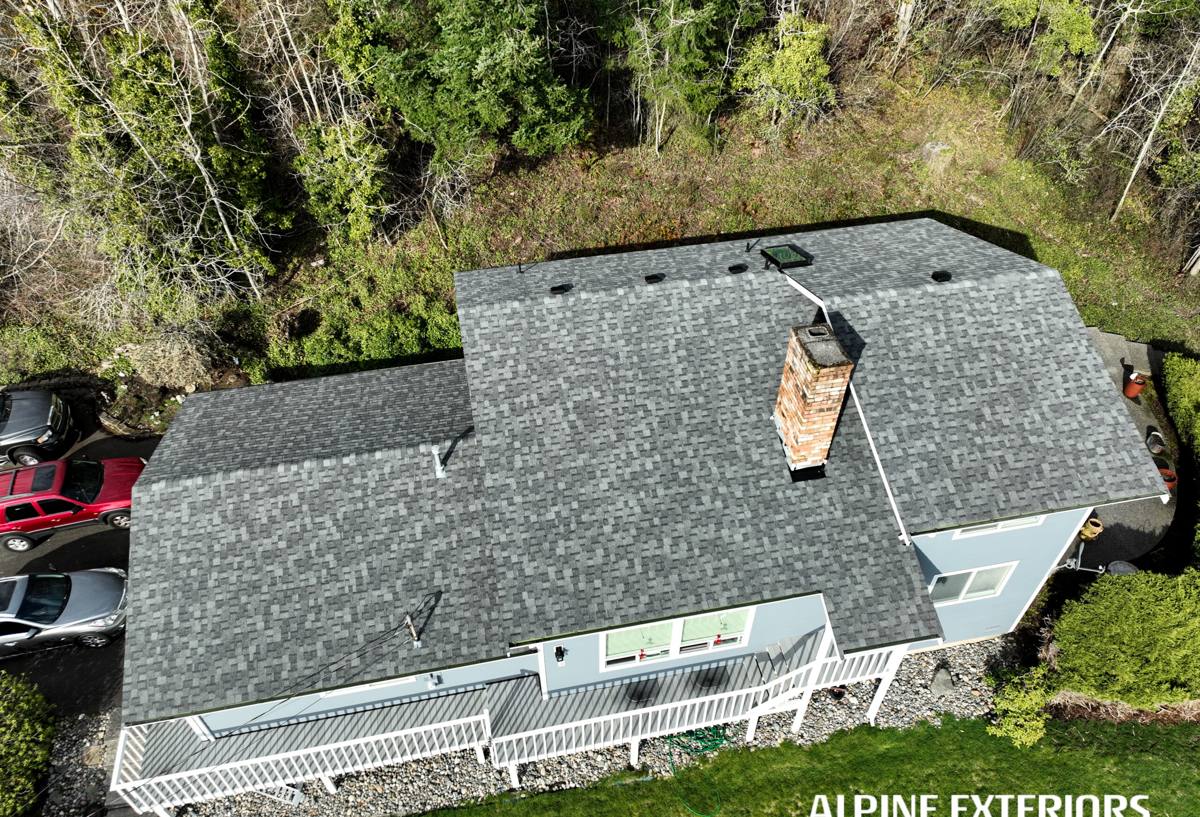
Why Asphalt Shingles Still Make Sense for Nooksack Homes
Asphalt shingles remain the most common roofing choice in Whatcom County for good reason. They're proven in wet marine climates, they're serviceable — meaning a damaged section can be repaired without tearing off the whole roof — and the cost-to-lifespan ratio is hard to beat for most homeowners. That said, not all asphalt shingles perform the same way in a climate like this.
The shingles that hold up best here are the ones rated for high wind uplift and algae resistance, installed with attention to how water actually moves across a roof in sustained rain rather than the occasional downpour. A shingle that's rated for a drier region but installed without the right underlayment or ventilation will age faster here than the same product would somewhere with less rainfall and less moss pressure.
What Local Conditions Push Us To Prioritize
- Algae-resistant shingle granules, since damp shade and moss spores are a year-round presence, not a seasonal one
- Wind ratings that account for gusts funneling through the valley and open field areas around Nooksack
- Ice-and-water shield at eaves and valleys, because freeze-thaw cycles in colder snaps can drive water back under shingles
- Balanced attic ventilation, so trapped moisture doesn't condense under the deck from the inside out
What a Correct Asphalt Shingle Job Actually Involves
A roof that's installed correctly does several things at once, and skipping any one of them is where most premature failures start. This is the sequence we hold ourselves to on every Nooksack roof, not just the ones a homeowner happens to be watching closely.
Deck Inspection and Repair
Before anything goes down, the decking underneath the old shingles gets inspected. Soft, delaminated, or water-stained sheathing gets replaced — covering it up with new shingles just hides a problem that will telegraph through the new roof within a couple of seasons.
Underlayment and Ice-and-Water Shield
In a climate with this much sustained rainfall, synthetic underlayment across the full roof is the baseline, with self-adhering ice-and-water membrane at eaves, valleys, and any roof-to-wall transitions where water concentrates. These are the spots that fail first when a roof is installed to a lower standard.
Flashing
Step flashing at walls, counter-flashing at chimneys, and proper valley metal are where most leaks actually originate — far more often than the shingle field itself. Flashing has to be replaced, not reused, whenever it's been compromised, corroded, or bent out of shape during tear-off.
Ventilation
A balanced intake-and-exhaust system keeps the attic close to outdoor temperature and lets moisture escape instead of condensing on the underside of the deck. In our marine climate, poor ventilation is one of the most common reasons a roof develops rot from the inside while looking fine from the street.
Shingle Installation and Fastening
Correct nail placement, count, and pattern matter more in a high-wind, high-rain area than manufacturers' minimums might suggest. We install to the fastening schedule that keeps the warranty intact and holds up to what Whatcom County storms actually deliver.
Comparing Asphalt Shingle Grades for This Climate
| Shingle Type | Typical Lifespan Here | Wind/Moisture Performance | Best For |
|---|---|---|---|
| 3-tab (economy) | 15-20 years | Lower wind rating, less algae resistance | Budget-driven projects, outbuildings, rentals |
| Architectural (standard) | 25-30 years | Good wind rating, algae-resistant granules available | Most Nooksack homes — the common-sense default |
| Premium/designer architectural | 30+ years | Highest wind rating, thicker mat, best algae resistance | Homes with heavy tree cover or long-term ownership plans |
For most homeowners in this area, standard architectural shingles with an algae-resistant rating hit the right balance of cost, appearance, and durability against the moss and rain this region sees.
Moss, Algae, and the Long Wet Season
Moss doesn't just look bad — it holds moisture against the shingle surface, works its way under tabs, and can lift shingles enough to let wind-driven rain in. In a county with as much shade, humidity, and rainfall as Whatcom, moss pressure is one of the biggest long-term threats to a shingle roof, more than sun exposure or hail ever will be here.
Keeping Moss and Algae in Check
- Choose algae-resistant shingles at install — the copper-infused granules resist regrowth for years longer than standard granules
- Keep gutters and valleys clear so water doesn't pool and give moss a place to establish
- Trim back overhanging branches to cut down on shade and debris buildup on the roof plane
- Have moss physically removed (not pressure-washed, which can strip granules) rather than left to spread
- Schedule a visual roof check every year or two, especially after a wet winter
Our Process, Start to Finish
We keep the process straightforward because a roof replacement is disruptive enough without added confusion.
- On-site inspection and estimate. We look at the current roof, the decking condition where visible, ventilation, and any trouble spots, then give a written estimate with no pressure to sign on the spot.
- Material selection. We walk through shingle grade and color options suited to your home and budget, and explain the trade-offs honestly rather than upselling.
- Scheduling around weather. Roofing in this climate means watching forecasts closely — we plan tear-off and dry-in around dry windows so your home isn't left exposed.
- Tear-off and deck repair. Old roofing comes off, decking gets inspected, and any needed repairs happen before anything new goes down.
- Installation. Underlayment, ice-and-water shield, flashing, ventilation, and shingles go in following the sequence above.
- Cleanup and final walkthrough. We clear debris and nails from the yard and driveway and walk the finished roof with you before calling the job done.
What Drives the Cost of a Shingle Roof in Nooksack
| Factor | Why It Matters |
|---|---|
| Roof size and pitch | Steeper roofs take longer and require more safety setup, affecting labor cost |
| Number of layers to remove | Tear-off of multiple old layers adds time and disposal cost |
| Deck condition | Rot or soft sheathing found during tear-off adds material and labor |
| Shingle grade chosen | 3-tab, standard architectural, and premium lines carry different material costs |
| Flashing and ventilation needs | Chimneys, skylights, and valleys each add detail work and materials |
| Access and site conditions | Tight lots, landscaping, or long driveways can affect setup and disposal logistics |
We give exact numbers only after seeing the roof in person — anyone quoting a firm price sight unseen is guessing, and that guess usually changes once the tear-off starts.
Why Hiring a Crew That Already Works Nooksack Matters
A roofing crew that regularly works Whatcom County jobs already knows how this climate treats a roof over time — where moss builds up fastest, which valleys tend to see the most wind-driven rain, and how local permitting and disposal logistics work. That local pattern recognition shows up in small decisions during installation that a crew from outside the area might not think twice about.
It also matters for accountability. A local crew is easy to reach if a question comes up after the job, and has a reputation in the community worth protecting. That's a different relationship than working with an out-of-area company that may not be back through Whatcom County again for months.
Maintenance and Warning Signs Worth Watching
Even a well-installed roof benefits from a little attention. A few minutes twice a year can catch small issues before they turn into interior damage.
- Granules collecting in gutters — normal in small amounts when new, a warning sign in large amounts on an older roof
- Shingles that look curled, cracked, or lifted at the edges
- Dark streaking or moss patches, especially on north-facing or shaded slopes
- Sagging areas anywhere on the roof plane
- Water stains on interior ceilings or in the attic after a heavy rain
- Flashing that looks bent, rusted, or pulled away from a wall or chimney
Catching any of these early is almost always cheaper than waiting until there's interior damage to deal with.
If your Nooksack home is due for a roof inspection or you're weighing a replacement, we're glad to take a look and give you a straight, no-pressure estimate — just fill out the form below and we'll get back to you.