 Whatcom County
 Siding Installation in Lynden: What Local Homes Are Actually Up Against
Lynden sits in one of the wetter, greener corners of Whatcom County, and that's exactly the problem for exterior siding. Homes here deal with a long, low-intensity rain season that soaks into anything porous, driving rain off the open farmland that hits walls at an angle rather than straight down, and a moss and algae season that can stretch for the better part of the year on north-facing walls and shaded elevations. Add the salt-tinged air that moves inland from the Strait of Georgia and Bellingham Bay, and you've got a climate that's genuinely tough on the wrong siding product. This isn't a page about siding installation in general — it's about what a correct siding job looks like specifically for a Lynden home, and why the details matter more here than they would somewhere drier.
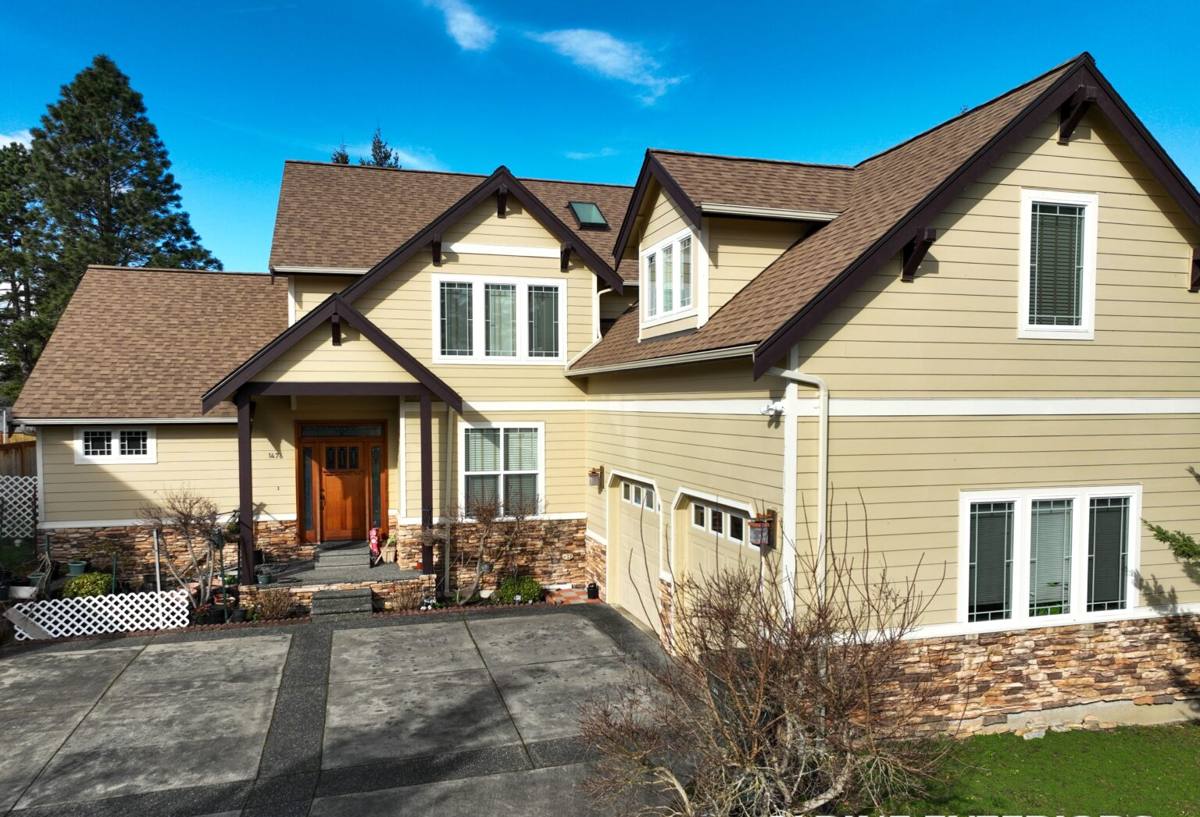
Why Product Choice Matters Before Installation Even Starts
A lot of homeowners think of siding installation as a labor problem — get a good crew, and the material is secondary. In Whatcom County, that's backwards. The wrong material, installed perfectly, will still fail early here. The right material, installed poorly, will also fail early. You need both pieces right, and it starts with the product.
We install James Hardie fiber cement siding exclusively. We don't install vinyl, LP SmartSide, primed spruce, cedar, or other fiber cement brands, and we're upfront about why: those products each have a real weakness that shows up faster in this climate than in a drier one. Wood-based products (LP SmartSide, primed spruce, cedar) rely on an intact factory or field-applied coating to keep moisture out of engineered wood or wood fiber. Once that coating is compromised — a hairline crack, a poorly caulked joint, a spot where water sits against moss — moisture gets into the substrate, and in a climate with Lynden's rain totals and humidity, that problem doesn't dry out between storms the way it might in a drier region. Vinyl doesn't rot, but it flexes, gaps at seams, and fades under UV over decades, and it doesn't hold paint if you ever want to change the color. James Hardie fiber cement is non-combustible, doesn't support moss growth the way wood fibers do, and holds its factory-applied ColorPlus finish without repainting for many years when installed and maintained correctly.
What Whatcom County's Climate Specifically Demands
- Rain-screen or proper drainage detailing behind the siding so water that gets past the surface has somewhere to go instead of sitting against the wall sheathing.
- Correct flashing at every horizontal joint, window, and door — this is where the vast majority of siding failures actually start, not in the field of the wall.
- Adequate clearance from grade, decks, and roof lines so splash-back and moss-holding debris don't sit against the bottom courses.
- A factory finish that resists mildew and algae staining on the shaded, north- and east-facing walls that stay damp longest after Whatcom County's fall and winter rain systems.
- Fastening and joint treatment that accounts for the area's humidity swings, not just a one-size-fits-all install spec pulled from a drier climate zone.
What a Correct Siding Installation Involves
Siding installation is not just cutting boards and nailing them up. On a Lynden home, the sequence and the details are what separate a job that lasts decades from one that needs attention in five or six years.
1. Tear-Off and Substrate Inspection
Old siding comes off and the wall sheathing gets inspected before anything new goes up. This is the point where hidden moisture damage from a previous product — often the wood-based sidings we mentioned above — gets found. Any soft or water-stained sheathing gets repaired before installation continues. Skipping this step is the single most common shortcut that leads to problems being sealed in behind new siding.
2. Weather-Resistive Barrier and Drainage Plane
A proper weather-resistive barrier goes over the sheathing, lapped correctly from bottom to top so water sheds downward and outward. In a high-rainfall area like Whatcom County, we pay particular attention to creating a drainage path behind the cladding rather than relying on a single barrier layer to do all the work.
3. Flashing Details
Every window, door, and horizontal trim transition gets flashed so water is directed out and away from the wall assembly, not trapped behind it. This is slower work than just running siding past an opening, but it's the difference between a wall system that handles Lynden's driving rain and one that doesn't.
4. James Hardie Panel or Plank Installation
Boards or panels go up to manufacturer spec — correct fastener type and spacing, correct gapping at butt joints, correct clearance at the bottom of the wall. James Hardie's HZ5 product line is engineered for wetter, colder climate zones like the Pacific Northwest, which matters more in Whatcom County than in much of the country.
5. Caulking, Trim, and Final Detailing
Joints get sealed with the right sealant in the right locations — not everywhere, since over-caulking can trap moisture just as poorly-placed gaps can let it in. Trim and corners get finished to shed water rather than collect it.
Comparing Siding Materials for a Lynden Climate
| Material | Moisture Behavior in High-Rain Climate | Moss/Algae Resistance | Long-Term Finish |
|---|---|---|---|
| James Hardie Fiber Cement | Doesn't absorb and swell like wood-based products; engineered HZ5 line for PNW conditions | Non-organic material, factory finish resists staining better than wood fiber | ColorPlus factory finish, no repainting for many years when maintained |
| Vinyl | Doesn't rot but seams and gaps can let moisture behind the wall unnoticed | Can stain and hold algae in shaded, damp areas | Fades over time, cannot be repainted easily |
| LP SmartSide / Engineered Wood | Wood-strand core vulnerable if coating is compromised; high humidity slows drying | Wood fiber substrate more prone to organic growth if finish fails | Requires intact coating maintenance to prevent substrate damage |
| Cedar / Primed Spruce | Natural wood, absorbs moisture readily without diligent upkeep | Most prone to moss and mildew of the group in constant damp | Needs regular refinishing/repainting to stay protected |
Why Hire a Crew That Already Works in Lynden
Building envelope details that work in Arizona or even drier parts of Eastern Washington don't automatically hold up here. A crew that primarily works dry climates may under-detail flashing, skip drainage planes, or use fastening schedules that aren't matched to sustained humidity. A crew that works Whatcom County regularly already knows:
- Which elevations on a typical Lynden lot see the most sustained shade and moisture, and need extra attention at flashing and clearance
- How local moss growth patterns affect where algae-resistant coatings matter most
- What clearance from grade and hardscape actually holds up through a wet Whatcom County winter
- How salt-influenced air moving in from the coast affects fastener and trim material choices
That local knowledge doesn't show up as a line item on a quote, but it shows up in whether the siding still looks and performs well after ten Lynden winters.
Our Process for a Lynden Siding Installation
- On-site assessment — we look at your home's exposure, existing siding condition, and any moisture or ventilation issues before quoting anything.
- Product and color selection — walking through James Hardie's HZ5 lines and ColorPlus finish options suited to the home's style and exposure.
- Detailed written estimate — scope, product, and timeline spelled out, no vague allowances.
- Tear-off and substrate check — old siding removed, sheathing inspected and repaired as needed.
- Installation to manufacturer spec — weather barrier, flashing, fastening, and finishing done in the correct sequence.
- Final walkthrough — reviewing the finished work and care guidance with you before we consider the job done.
What to Ask Any Contractor Before Siding Installation
- Will you inspect and repair the wall sheathing before new siding goes up, or just cover what's there?
- What's your flashing detail at windows, doors, and horizontal joints?
- Is there a drainage plane behind the siding, or does the barrier alone have to do the job?
- Which James Hardie product line and finish are you specifying, and why that one for this house?
- What's the manufacturer's fastening and clearance spec, and will the crew follow it exactly?
What Homeowners Can Do Between Now and an Installation
If you're not ready to replace your siding yet but you're noticing early warning signs — soft spots, persistent moss lines, paint that won't hold, or gaps opening at trim and joints — it's worth having those looked at sooner rather than later. In Whatcom County's climate, small moisture problems behind siding tend to grow through the wet season rather than resolve on their own.
If you're a Lynden homeowner thinking about siding replacement or noticing signs your current siding isn't holding up to the rain and moss, we're happy to take a look and give you a straightforward, no-pressure estimate — just fill out the form below.