 Whatcom County
 Why Barkley Roofs Take a Different Kind of Beating
Barkley sits close enough to the water and the wind patterns that move through Whatcom County that roofs here work harder than roofs fifty miles inland. Three things drive most of the roofing calls we get from this area: salt-laden air that accelerates corrosion on unprotected metal, driving rain that gets pushed sideways under poorly flashed edges instead of running straight off, and a moss season that can run eight or nine months out of the year on north-facing slopes shaded by mature trees. None of these are dramatic, one-time events. They're slow, steady pressure, and a roof that isn't specified for them will show it years before it should.
Metal roofing, installed correctly, is one of the better answers to all three. It doesn't give moss the foothold that shingles do, it sheds wind-driven rain instead of absorbing it, and modern coated steel and aluminum handle coastal air far better than bare fasteners or unprotected trim ever will. The word "correctly" is doing a lot of work in that sentence, and most of this page is about what that actually means.
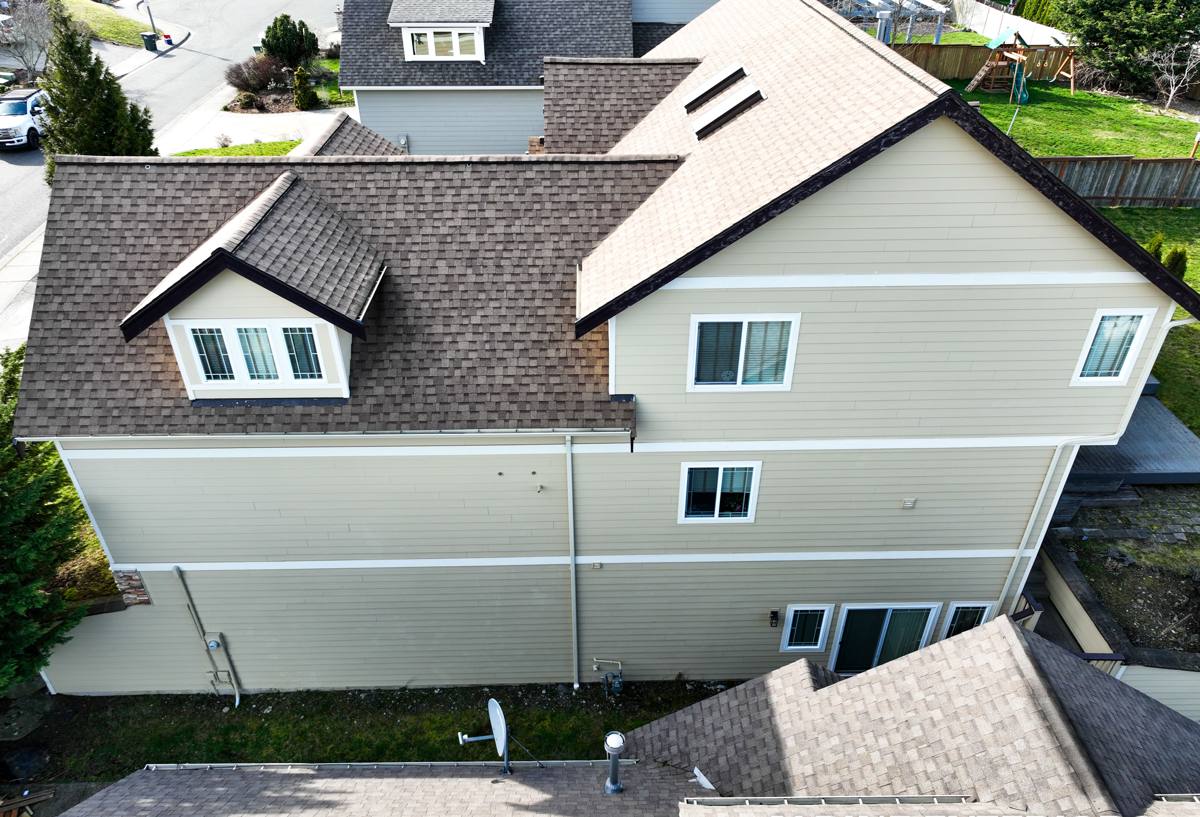
What Metal Roofing Solves That Other Materials Struggle With
Composition shingles are still a reasonable choice for a lot of homes, but in the specific conditions Barkley sees, metal has real advantages worth understanding before you decide.
Moss Resistance
Moss needs organic grit to grab onto and constant moisture to survive. Asphalt shingle granules give it both. A smooth, factory-finished metal panel gives it almost neither. Homes on tree-shaded lots or with roof slopes that stay damp longer into the day see the biggest difference — fewer moss treatments, less granule loss, and no soft spots developing under a moss mat you can't see from the ground.
Wind-Driven Rain
Storms coming off the water don't always fall straight down. When rain is being pushed sideways, the seams and laps in a roofing system matter more than the field material itself. Standing seam panels with mechanically or hand-crimped joints shed that kind of weather far better than a system that relies on overlap and gravity alone.
Longevity Against Salt Air
Bare or poorly coated steel corrodes faster near coastal air. That's not a knock on steel as a material — it's why finish and fastener selection matter as much as the panel itself. A properly coated, properly fastened metal roof is built to handle exactly this kind of exposure for decades.
Panel Types and Finishes: What We Actually Recommend
Not all metal roofing is the same product wearing different colors. The two broad categories homeowners run into are standing seam and exposed-fastener panels, and the choice affects both upfront cost and long-term maintenance.
| Option | How It's Fastened | Best For | Trade-Off |
|---|---|---|---|
| Standing seam | Concealed clips, no exposed screws in the field | Long-term, low-maintenance roofs; homes exposed to driving rain | Higher material and labor cost |
| Exposed-fastener panel | Screws through the panel face with rubber washers | Budget-conscious projects, outbuildings, shops | Washers age and need eventual re-torquing or replacement |
| Steel (coated) | Painted or coated finish over galvanized or Galvalume steel | Most residential roofs | Coating quality determines corrosion resistance — not all coatings are equal |
| Aluminum | Naturally corrosion-resistant, no coating required for base protection | Homes with heavier salt-air exposure | Softer material, more careful handling during install |
Our standard recommendation for most Barkley homes is a coated steel or aluminum standing seam system. We'll walk through the trade-offs on your specific roof rather than pushing one system for every job — slope, tree cover, and how close you are to prevailing weather all factor into it.
What a Correct Installation Actually Involves
Metal roofing fails early almost exclusively because of installation shortcuts, not because the material itself wore out. The things that actually determine how a metal roof performs over the next 30-plus years happen underneath the panels and at the edges, not in the field of the roof.
- Full ice-and-water barrier at eaves, valleys, and around every penetration — this is the backup layer that protects you if wind ever pushes water past the panel seams
- Correct underlayment across the whole deck, not just spot-applied where code minimums require it
- Panel fastening pattern matched to the manufacturer's wind-load spec for your exposure, not a generic pattern used everywhere
- Properly formed flashing at every ridge, valley, wall transition, and penetration — this is where most leaks actually originate, not in the open field of panels
- Compatible fasteners and trim so you're not mixing metals that corrode each other over time
- Ventilation that matches the new roof assembly, since metal roofs handle heat and moisture differently than shingles underneath
Any one of these done wrong won't necessarily show up as a leak this year. It shows up in year six or eight, usually at the worst possible time — mid-storm, with water already inside the wall cavity.
Our Process on a Barkley Metal Roofing Project
1. On-Site Inspection
We look at the existing roof deck, flashing points, ventilation, and tree exposure before quoting anything. Roofs shaded most of the day and roofs in open wind get different recommendations even on the same street.
2. Straightforward Written Estimate
You get a scope of work and a price, not a verbal ballpark. If tear-off is needed versus a direct overlay in limited cases, that's spelled out and explained.
3. Tear-Off, Deck Check, and Underlayment
Old roofing comes off, the deck gets inspected for soft spots or rot (common where moss has been sitting for years), and any needed repairs happen before a single panel goes on.
4. Panel Install and Flashing Detail
This is where the crew's experience actually shows — clean seams, correctly lapped and sealed flashing, and fastening that matches the wind exposure of your specific site.
5. Walk-Through and Cleanup
We walk the finished roof with you, confirm the details, and clear the site of debris, including magnetic sweeps for stray fasteners in the yard and driveway.
Cost Factors for a Metal Roof in This Area
We don't publish flat per-square pricing because roof geometry and site conditions change the number more than most homeowners expect. What we can tell you is what actually moves the price up or down.
| Factor | Why It Matters Here |
|---|---|
| Roof complexity (valleys, dormers, penetrations) | Every valley and penetration is a flashing detail that takes time to do right |
| Steel vs. aluminum vs. premium coatings | Coastal exposure often justifies the upgrade to better corrosion resistance |
| Tear-off vs. overlay | Moss and moisture damage under old shingles is common enough here that we check the deck before assuming overlay is an option |
| Access and roof pitch | Steeper roofs and tight lot access add labor time regardless of material |
| Ventilation upgrades | Older homes converting to metal sometimes need ventilation adjustments as part of the job |
Metal costs more upfront than composition shingles in almost every case. Where it earns that back is in reduced moss treatments, fewer repair calls, and a service life that's typically two to three times longer than asphalt shingles when installed correctly.
Living With a Metal Roof Through Moss Season
Metal dramatically reduces moss growth, but "reduces" isn't "eliminates," especially on heavily shaded slopes. A few habits keep a metal roof performing the way it should through a long Whatcom County wet season:
- Keep gutters and valleys clear of needles and leaf debris, which hold moisture against the panel edges
- Trim back branches that keep a roof section shaded and damp most of the day
- Have flashing and sealant points checked periodically rather than waiting for a visible leak
- Address any moss that does establish on trim or low-slope sections early, before it holds water against a seam
None of this is heavy maintenance compared to a shingle roof — that's the point of choosing metal for this climate in the first place.
Why a Crew That Already Works Barkley Makes a Difference
Roofing crews who mostly work drier, inland regions sometimes under-flash for wind-driven rain because they've never had to deal with it regularly. A crew working Whatcom County roofs consistently already knows which slopes and exposures need extra attention, how local moss and moisture patterns behave over a full year, and what actually holds up here versus what looks fine on installation day and fails in year three. That's not a marketing point — it's the difference between a roof that needs babysitting and one that doesn't.
Signs It's Time to Talk About a New Roof
- Moss buildup that returns within months of cleaning, even after treatment
- Curling, cracking, or bare spots on shingles, especially on north-facing slopes
- Rust staining or corrosion around old metal flashing or fasteners
- Water stains on interior ceilings after wind-driven storms specifically
- A roof original to the home and approaching or past its expected service life
- Visible sagging in the roof deck, which points to moisture damage underneath
If you're seeing more than one of these, it's worth an honest inspection before another wet season adds to the damage.
If you're weighing metal roofing for a home in the Barkley area, we're glad to take a look and give you a straight answer — including telling you if your current roof has more life left in it than you think. Use the form below to request a free, no-pressure estimate.