 Whatcom County
 Why Whatcom County Weather Is Hard on Decks
A deck in Nooksack lives outside year-round, and Whatcom County doesn't give it much of a break. The marine air that moves in off the Sound and the Strait keeps everything damp for long stretches, driving rain gets pushed sideways into ledger boards and rail posts, and the shoulder seasons bring a moss season that runs longer here than it does in drier parts of the state. None of that is dramatic on its own, but it adds up over years of exposure, and it shows up first in the parts of a deck that are hardest to see from the yard: the ledger connection to the house, the tops of posts, and the framing underneath the boards.
Wood decks take the brunt of it because wood moves with moisture — swelling, drying, swelling again — and every cycle loosens fasteners a little more and opens tiny gaps where water gets in and stays. Composite and capped decking resist surface rot but aren't immune to problems either, since the framing underneath is still usually wood and still exposed to the same climate. Repairing a deck correctly in this county means treating it as a moisture-management problem first and a cosmetic problem second.
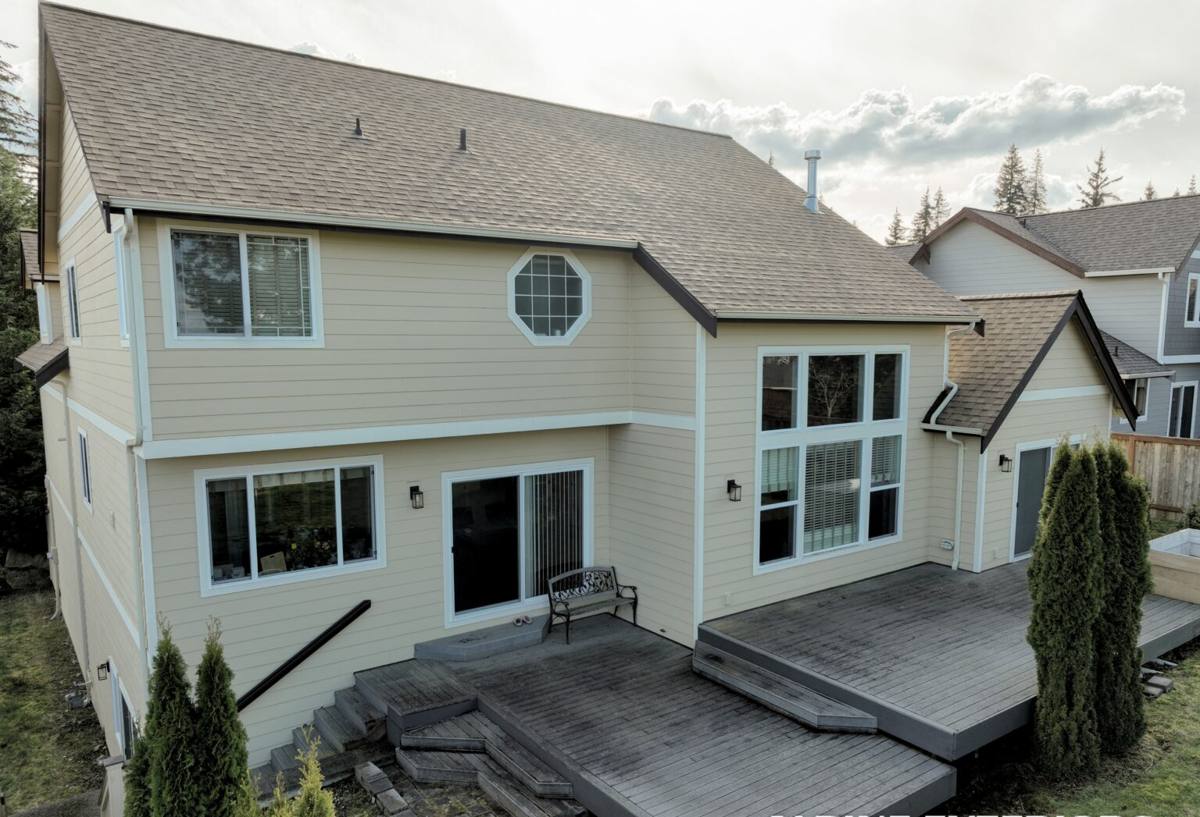
Common Deck Problems We See Around Nooksack
Ledger Board and Rim Joist Rot
The ledger board — where the deck attaches to the house — is the single most important structural connection on most decks, and it's also the spot most exposed to water running off siding, gutters, and rooflines above it. Missing or failed flashing at the ledger lets water track behind the board year after year, and by the time it's visible from underneath, the rim joist behind it may already be soft.
Post Bases and Footings
Posts that sit directly on concrete without a proper standoff base, or in a footing that holds water, rot from the bottom up. This is a slow failure — the deck can feel solid for years and then start to sway or settle once enough of the post base is gone.
Moss, Algae, and Slippery Decking
Whatcom County's long damp season grows moss on almost any horizontal wood surface that doesn't get much sun, and decks tucked against the house or under trees are prime spots for it. Beyond the mess, moss and algae hold moisture against the boards and make the surface genuinely slick underfoot.
Corroded or Failing Fasteners
Older decks built with standard galvanized or even non-coated fasteners often show rust streaks and loosening screws well before the wood itself gives out. Once fasteners start pulling loose, boards cup, edges lift, and the deck develops the springy, uneven feel homeowners usually describe as "getting old."
Loose or Out-of-Code Railings
Rail posts take a lot of lateral stress just from people leaning on them, and if the post-to-frame connection has weakened, a railing can develop noticeable play well before the rest of the deck shows problems. Older railings may also fall short of current guardrail height and baluster-spacing requirements, which matters for safety and for anyone planning to sell the house.
What an Honest Deck Repair Actually Involves
A repair that only addresses what's visible from the top — replacing a few gray boards, tightening some screws — can leave the actual problem underneath untouched. A correct repair starts with the structure: the ledger connection, the framing, the post bases, and the fasteners holding it all together. Surface work comes after that's confirmed sound, not instead of it.
Part of doing this right is knowing when a repair is a real fix and when it's a patch on top of a bigger problem. A single soft board next to an otherwise solid frame is a straightforward repair. Rot at the ledger, multiple soft joists, or post bases that have lost structural wood usually mean the framing needs to be addressed directly, even if the surface decking still looks fine.
Repair or Replace? How We Help You Decide
Not every problem deck needs to come down. The table below covers the factors that usually decide whether repair makes sense or a rebuild is the smarter long-term move.
| Factor | Repair Usually Makes Sense | Replacement Usually Makes Sense |
|---|---|---|
| Extent of rot | Isolated to a few boards or one framing member | Spread across multiple joists, the ledger, and post bases |
| Deck age | Under 15–20 years, built to a reasonable standard | Original construction is old, undersized, or non-compliant |
| Fastener condition | Mostly sound, a few spots showing wear | Widespread corrosion, loose connections throughout |
| Railing | Solid framing, meets current height/spacing code | Undersized posts, out-of-code spacing, structural play |
| Ledger flashing | Intact or repairable without major disruption | Missing or failed, with water damage behind siding |
| Cost outlook | Repair cost is a fraction of full replacement | Repair costs start approaching what a rebuild would cost |
Costs vary a lot depending on scope — a targeted board and fastener repair is a modest job, while ledger and framing work involving flashing, code corrections, and structural lumber runs higher. We give you real numbers after we've actually looked at the deck, not a guess over the phone.
Our Deck Repair Process in Nooksack
- Inspection from underneath. We check the ledger connection, joists, post bases, and hardware — not just the walking surface — and use a moisture meter where rot is suspected but not obvious.
- Written scope. You get a clear breakdown of what's structural, what's cosmetic, and what's code-related, so you're not guessing at what you're paying for.
- Structure first. Ledger flashing, framing, and post connections get repaired or replaced before we touch surface decking, so the fix holds instead of masking a deeper problem.
- Surface and rail work. Damaged boards, loose rails, and worn fasteners get addressed, matched to the existing deck where that's the goal.
- Drainage check. We look at how water sheds off the deck and away from the ledger, since a repair that ignores drainage tends to fail again.
Materials and Fasteners for This Climate
Fasteners
Most modern deck lumber is treated with chemicals that corrode standard galvanized steel over time, which is part of why older decks show rust streaks and loosening screws years before the wood fails. Our standard is stainless steel or properly rated hot-dip galvanized fasteners and hardware sized for the connection — cheaper fasteners are a false economy on a deck that's going to sit in wet Whatcom County air for another decade or two.
Decking Options
Wood decking is straightforward to repair board-by-board and can be refinished, but it needs regular maintenance — cleaning, sealing, and prompt attention to any soft spots — to hold up through the county's wet stretches. Capped composite decking resists surface rot and doesn't need staining, but it's a different repair conversation: boards typically need to be replaced rather than patched, and the framing underneath still needs the same moisture protection as a wood deck. We'll walk through the honest trade-offs for your specific deck rather than pushing one material as a universal answer.
Keeping a Repaired Deck Healthy
A repair holds up a lot longer with some basic upkeep, especially in a climate that stays damp as long as this one does.
- Sweep leaves and debris out from between boards regularly — trapped debris holds moisture against the wood.
- Keep gutters and downspouts above the deck clear so runoff isn't draining onto it.
- Clean moss and algae with a deck-safe cleaner rather than relying on a pressure washer alone, which can drive water into the wood grain and damage the surface.
- Reapply water repellent or stain on the schedule the product calls for — this is the single biggest factor in how long wood decking lasts here.
- Check the ledger flashing and post bases once a year for any sign of water intrusion.
- Trim back vegetation that's shading the deck or blocking airflow underneath it.
- Re-tighten or replace any fasteners that show rust streaks before they let go.
Why Hiring a Crew That Already Works in Nooksack Matters
A deck repair contractor who works regularly in Whatcom County knows what to check first because they've seen the same failure patterns on dozens of local decks — ledger rot from a specific flashing gap, post bases in shaded corners that never fully dry out, moss buildup on north-facing decking. That familiarity means less time spent diagnosing and more time spent fixing the actual problem. It also means understanding the local permitting process for structural or railing work and scheduling around the wet-weather windows that make a real difference in how well fresh repairs cure and hold.
If your deck in Nooksack has soft spots, a wobbly rail, persistent moss, or you're just not sure whether it needs a repair or a rebuild, we're happy to take a look. The estimate is free, there's no pressure, and you'll get a straight answer about what your deck actually needs.