 Whatcom County
 Cordata sits inland enough that people sometimes assume it's sheltered from Whatcom County's rougher weather. It isn't. Bellingham Bay is close enough that salt-laden air still reaches rooftops here, driving rain off the Strait finds its way into roof-wall junctions and eaves, and the mature tree cover that makes the neighborhood pleasant also means shade, damp bark, and a moss season that runs longer than most homeowners expect. A roof repair that holds up in a drier part of the state doesn't always hold up here, and a repair that only fixes what's visible from the ground rarely lasts more than a season or two.
Why Cordata Roofs Age the Way They Do
Three things shape roof wear in this part of Whatcom County, and they compound each other. Salt air carried in off the water accelerates corrosion on exposed fasteners, flashing, and vent stacks faster than most manufacturers' warranties account for. Driving rain, pushed sideways by wind off the water and the low hills around Bellingham, gets forced up under shingle tabs and into laps that are only designed to shed water falling straight down. And moss and algae, which thrive in the shade and moisture of a neighborhood with good tree cover, hold water against the roof surface long after a storm has passed, which is exactly the condition wood decking and shingle mat don't tolerate well.
None of these on their own is unusual for Western Washington. Together, over a long wet season, they explain why roofs in this area often show granule loss, soft spots, and flashing failure years before the shingles themselves are technically "worn out."
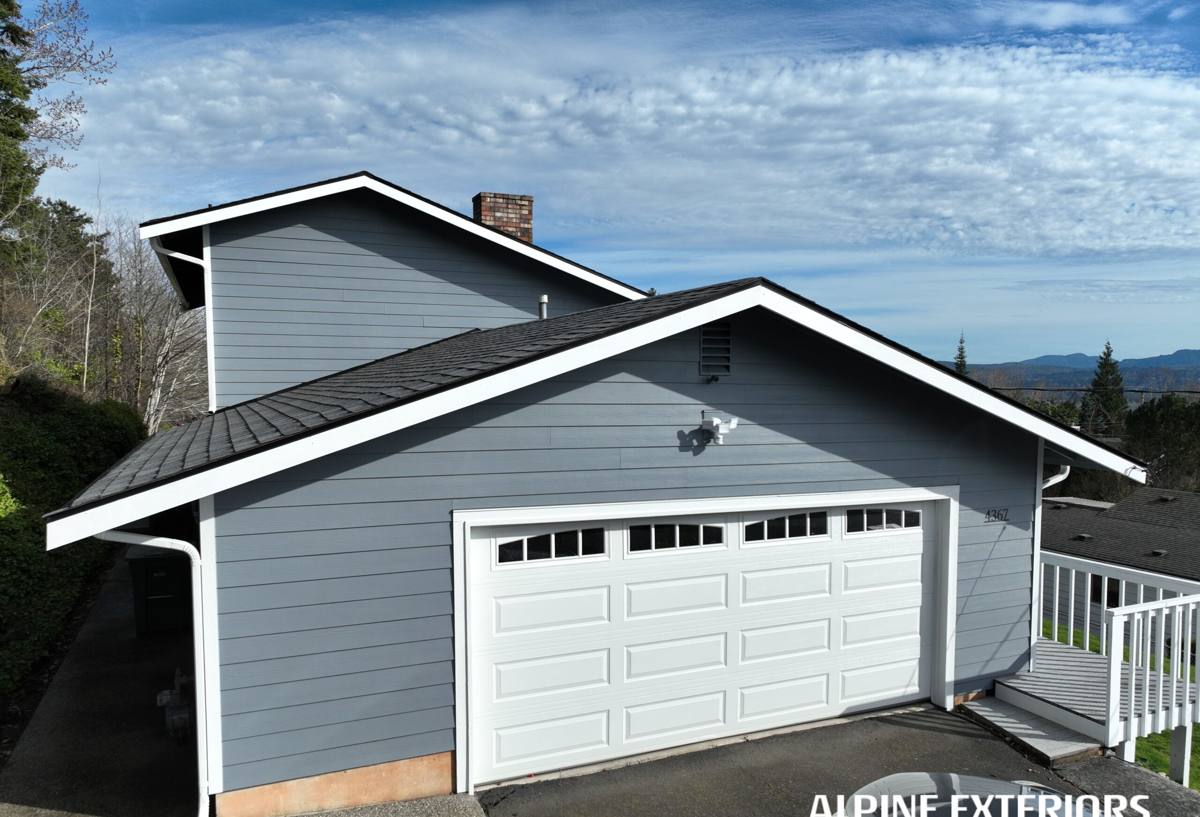
Common Roof Problems We Find in Cordata Homes
Most repair calls we get in this neighborhood fall into a handful of categories:
- Moss and algae buildup at the shaded north- and east-facing slopes, lifting shingle edges and trapping moisture underneath
- Flashing failures where the roof meets siding, chimneys, dormers, or skylights — the single most common source of interior water stains we're called out for
- Clogged or undersized gutters and valleys that back water up under the shingle field during heavy rain events
- Wind-lifted or cracked shingle tabs along exposed ridgelines and roof edges
- Corroded fasteners and pipe boot seals that dry out, crack, or rust from years of salt-tinged moisture
- Soft or spongy decking discovered only once a smaller leak has been left unaddressed for a season
A lot of these start small and stay hidden. Because we also do siding and exterior work throughout Whatcom County, we're frequently the ones who spot early roof trouble while we're up close to a wall or eave for an unrelated job — and roof-to-wall flashing problems in particular tend to show up as siding or trim damage before anyone notices the roof itself.
What a Correct Roof Repair Actually Involves
A repair that's done right starts with figuring out where water is actually getting in, not just where a stain shows up on the ceiling. Water travels — it can enter at a flashing seam near a chimney and track along a rafter before dripping out somewhere else entirely. Chasing the visible symptom instead of the entry point is the most common reason a "repaired" roof leaks again in the next big storm.
A correct repair generally means:
- A full-slope inspection, not just a spot check at the reported leak location
- Removing enough surrounding material to see the actual condition of the underlayment and decking, not just the top layer of shingles
- Replacing compromised decking rather than patching over it
- Rebuilding flashing details — step flashing, counter-flashing, valley metal — to shed water correctly, not just resealing old metal with more sealant
- Matching replacement shingles as closely as possible in type, color, and exposure so the repair doesn't stand out or create a new weak seam
- Checking attic ventilation while the roof is open, since poor airflow is often what turns a small leak into trapped moisture and rot
Repair or Replace? How We Help You Decide
Not every roof problem in Cordata needs a full reroof, and we don't push one when a repair will genuinely hold. But we also won't patch a roof that's past the point where patching makes financial sense. Here's roughly how we walk homeowners through that decision:
| Factor | Leans toward repair | Leans toward replacement |
|---|---|---|
| Roof age | Under 12-15 years, one isolated problem area | Nearing or past the material's expected service life |
| Extent of damage | Localized to one flashing detail or slope | Granule loss, soft spots, or moss damage spread across multiple slopes |
| Repair history | First or second repair call | Third or more repair in a few years - a pattern, not a one-off |
| Decking condition | Solid, no rot found on inspection | Soft or delaminated decking found in more than one spot |
| Underlying cause | A single failed flashing or ventilation gap | Systemic issue - undersized ventilation, wrong original installation, widespread moss undermining the field |
We'll always tell you honestly which column your roof falls into, including when a repair is the right call even though a replacement would be more profitable for us to sell.
Our Roof Repair Process, Step by Step
- Inspection. We walk the roof (not just look from a ladder at the eave) and check the attic from the inside where access allows, since interior signs of moisture often tell us more than the exterior does.
- Diagnosis and written plan. You get a plain explanation of what's actually failing, why, and what fixing it correctly involves, before any work starts, not as a surprise on the invoice.
- Material match. We source shingles, flashing metal, and underlayment that match your existing roof as closely as possible, so the repair blends in and performs the same as the surrounding field.
- The repair itself. Decking replaced where needed, flashing rebuilt (not just recaulked), shingles woven in correctly at the edges, and fasteners and boots replaced rather than resealed.
- Cleanup and debris check. Old materials, nails, and granules cleared from the yard and gutters - a rushed cleanup is often the first sign of a rushed repair.
- Follow-up. We tell you what to watch for after the next hard rain and stand behind the work if something needs a second look.
Materials and Methods We Rely On, and Why
We install and repair with materials chosen for how they perform in this climate specifically, not just what's cheapest to source. A few of the calls we make and why:
Flashing metal over sealant-only fixes
Caulk and roofing cement have their place, but relying on sealant alone to close a flashing gap is a maintenance item, not a repair - it needs to be redone every year or two as it dries and cracks in sun and salt air. We prefer rebuilding the metal so the water is shed by geometry, not glued shut, which is why our repairs tend to outlast a quick sealant patch even though they take longer to do.
Moss control that treats the cause
Chemical moss treatments and zinc or copper strips both have a role, but neither replaces removing the moisture and shade conditions that let moss establish in the first place - overhanging branches, clogged valleys, and poor drainage. We treat moss as a symptom of a maintenance gap, not a one-time spray-and-done problem, and we'll say so rather than selling a treatment that only buys a season of relief.
Matching shingle types honestly
If your roof is an older architectural shingle that's no longer made in the same profile, we'll tell you that up front rather than installing a close-but-visibly-different match and hoping you don't notice. Sometimes that means widening the repair area to a full slope so the transition falls at a natural break line instead of the middle of a visible field.
Timing a Repair Around Whatcom County's Seasons
Roof repairs can technically happen year-round here, but timing matters more than most homeowners think. Moss and algae are easiest to remove and treat effectively in the drier stretches of the year, before the next wet season gives them months to re-establish. Flashing and shingle work goes faster and seals better when materials aren't cold and stiff or already saturated from days of rain. And a leak that shows up mid-winter is almost always better addressed with a prompt, targeted repair to stop the immediate damage, with any larger work scheduled for the next dry window rather than attempted in the middle of a storm cycle.
If you're planning ahead rather than responding to an active leak, late spring through early fall is generally the most efficient time to get moss removal, flashing rebuilds, and shingle replacement done in this part of Whatcom County.
Cost Factors Homeowners Should Understand
We won't quote a price without seeing the roof, but the honest range for a repair depends on a small number of factors that are worth knowing before you call around:
| Factor | Why it moves the cost |
|---|---|
| Access and roof pitch | Steeper slopes and harder-to-reach areas take longer and need more safety setup |
| Decking condition | Rotted decking found underneath adds material and labor beyond the original scope |
| Number of flashing details involved | A single pipe boot is a small fix; a chimney or dormer with multiple flashing runs is a larger one |
| Shingle availability | Common architectural shingles match easily; older or discontinued profiles may need a wider repair area |
| Extent of moss or algae damage | Surface treatment is inexpensive; moss that's already lifted shingles or damaged decking costs more to correct |
A Simple Maintenance Checklist for Cordata Homeowners
A lot of the repairs we do could have been smaller, cheaper fixes if they'd been caught a season earlier. A few minutes a couple of times a year makes a real difference here:
- Clear gutters and valleys before the fall rains start, and again mid-winter if trees are dropping debris
- Look for moss or dark streaking on shaded slopes each spring, before it has all summer and fall to spread
- Check for daylight or staining around chimney, vent, and skylight flashing from inside the attic if you can access it
- Trim back branches that overhang the roof to reduce shade, debris, and physical abrasion on shingles
- Have any ceiling stain, no matter how small, checked promptly - it's almost always cheaper to fix early
- Get an inspection after any major windstorm, even if nothing looks obviously wrong from the ground
Why Hiring a Crew That Already Works in Cordata Matters
Roof repair done by someone unfamiliar with this specific stretch of Whatcom County often misses the details that actually matter here - how far salt air travels inland, which roof orientations hold moss the longest, how local drainage patterns load up valleys and gutters during a heavy rain event off the Strait. A crew that already works this neighborhood has usually already seen your roof's failure mode on a house down the street, which means less time spent diagnosing and more time spent fixing the actual problem.
Because we work on siding as well as roofing throughout Whatcom County, we pay particular attention to the roof-to-wall intersection - the point where flashing, siding, and trim all meet and where a surprising number of leaks actually originate. A roofer who never touches siding can miss that a leak everyone assumed was roof-related is actually a wall flashing detail, and vice versa. Seeing both sides of that junction regularly is part of why we catch problems other inspections miss.
If you're dealing with a leak, a suspicious stain, or a roof that's overdue for a look after a rough winter, we're happy to come out and give you a straight, no-pressure assessment of what's actually going on and what it would take to fix it right. Use the form below to request a free estimate.