 Whatcom County
 Roof Repair Built for Lynden's Weather, Not Just Its Roofs
Lynden sits inland from the coastline, but it's still squarely inside the same wet marine air mass that soaks the rest of Whatcom County. Homeowners here deal with the same core problem as everyone along this stretch of the Pacific Northwest: months of low-intensity rain that finds every gap, followed by stretches of humid, shaded conditions that keep roof surfaces damp long after the storm has passed. Add in salt-tinged air drifting inland off the Sound during weather systems, and you've got a climate that's genuinely hard on roofing materials, even when a roof "looks fine" from the ground.
A roof repair here isn't just patching a leak. It's addressing the specific way this climate attacks a roof system — underlayment breakdown from prolonged moisture exposure, moss and organic growth that traps water against shingles, and flashing that corrodes or works loose from constant wet-dry cycling. Get the repair right and a roof can go years without another issue. Get it wrong — patch the symptom instead of the cause — and the same leak comes back within a season.
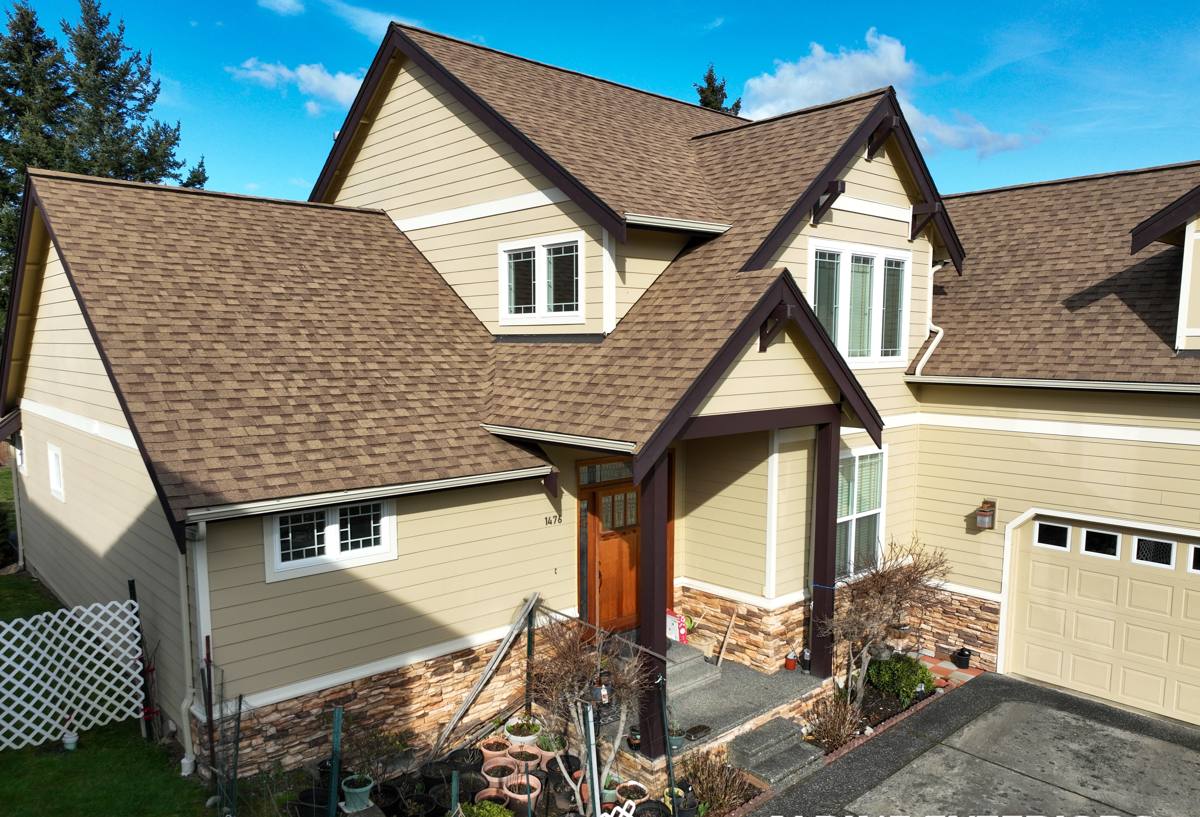
What Whatcom County's Climate Actually Does to a Roof
Moss and Organic Growth
Whatcom County's long, mild, damp season is close to ideal moss-growing weather. Moss doesn't just look bad — it holds water against the roofing surface for days at a time, works its root structure under shingle tabs and shakes, and gradually lifts material that should be lying flat and shedding water. On north-facing slopes and under tree cover, which describes a lot of Lynden properties, moss can establish itself within a couple of seasons if a roof isn't cleaned and treated periodically.
Driving Rain and Wind-Driven Leaks
Rain here doesn't always fall straight down. Wind-driven storms push water sideways and upward under normal laps in shingles, along ridge caps, and around any roof penetration — vents, chimneys, skylights. A roof that would stay watertight in a drier climate with less wind can leak in Whatcom County simply because the flashing and underlayment weren't detailed for wind-driven moisture in the first place.
Temperature and Moisture Cycling
Even without extreme heat, the repeated cycle of rain, drying, and cool nights slowly breaks down asphalt shingle granules, dries out sealant strips, and loosens fasteners in wood roofing. It's less dramatic than a hailstorm but does just as much damage over time — it's a slow accumulation, which is exactly why so many roof problems go unnoticed until there's a stain on a ceiling.
Signs a Lynden Home Needs Roof Repair
Most roof damage in this climate is visible before it becomes a full interior leak, if you know what to look for. Walk the exterior of your home periodically and check for:
- Dark streaking or green/black growth concentrated on shaded or north-facing roof slopes
- Shingles that are cupping, curling at the edges, or missing granules (visible as bare, shiny patches)
- Cracked, lifted, or missing flashing around chimneys, vent pipes, and skylights
- Sagging sections of roofline, especially near valleys where water volume is highest
- Water stains or discoloration on interior ceilings or in the attic near exterior walls
- Granules collecting in gutters or at the base of downspouts
- Daylight visible through the roof deck when viewed from inside the attic
- Soft or spongy spots when walking the roof (a sign of rotted decking underneath)
Any one of these on its own might be minor. A few together usually means the roof has been taking on moisture for a while and it's worth a proper inspection before the next wet stretch.
What a Correct Roof Repair Actually Involves
Diagnosis Before Patching
The most common mistake in roof repair isn't bad workmanship — it's fixing the spot where water showed up inside the house instead of where it's actually getting in. Water travels along rafters and decking before it drips, so a stain on a bedroom ceiling might trace back to a flashing failure several feet away. A correct repair starts with tracing the actual entry point, which usually means getting on the roof and checking flashing, valleys, and penetrations near the affected area, not just recaulking the first thing that looks suspicious.
Flashing and Underlayment
In a climate this wet, flashing does more of the work than the shingles themselves. Repairs that only replace surface shingles without addressing degraded flashing or underlayment underneath tend to fail again quickly. Proper repair means pulling back the surrounding roofing material, replacing compromised underlayment, and reinstalling flashing so water sheds correctly rather than just resealing a seam with caulk and hoping.
Matching Existing Materials
Repairs should blend with the existing roof, both for appearance and for performance — mismatched shingle profiles or incompatible materials can actually create new water pathways where old and new roofing meet. On older roofs where exact matches aren't available, we look for the closest match in profile and color and make sure the transition is detailed correctly rather than just close enough.
Ventilation Check
Roof leaks and attic moisture problems are often related. Poor attic ventilation traps humid air against the underside of the roof deck, which accelerates rot and can mimic or worsen a leak that started elsewhere. Part of a thorough repair visit includes checking that soffit and ridge ventilation are actually working, not just present.
Roofing Materials Common in Whatcom County Homes
The right repair approach depends heavily on what's already on the roof. Here's how the common materials in this area hold up and what repair typically involves for each:
| Material | How It Handles This Climate | Typical Repair Considerations |
|---|---|---|
| Asphalt (3-tab and architectural) shingles | Reliable if properly ventilated; granule loss and moss are the main long-term issues | Individual shingle replacement is straightforward if matching stock is available; flashing usually needs attention too |
| Cedar shake / shingle | Traditional look but requires more upkeep in wet, shaded conditions; prone to moss and rot without maintenance | Repairs require careful weaving of new shakes into old coursing; rot often extends further than it appears |
| Metal roofing | Sheds moss and rain well once properly installed; fastener and seam integrity are the main wear points | Repairs focus on fastener replacement, sealant at seams and penetrations, and correcting any panel movement |
| Composite/synthetic shingle | Generally durable and moisture-resistant; issues usually come from installation-era workmanship | Matching older discontinued profiles can be the biggest challenge |
Our Roof Repair Process
- Inspection and diagnosis — we get on the roof (weather permitting) and in the attic if accessible, and trace the actual source of the problem rather than guessing from the ground.
- Honest assessment — we tell you what we find, including if the damage is more extensive than a simple patch, or if a repair genuinely isn't the right call anymore.
- Written scope and estimate — you know what's being done, what materials are used, and what it costs before any work starts.
- Repair work — including removal of damaged material, replacement of underlayment and flashing where needed, and installation of matching roofing material.
- Cleanup and site check — old material and debris removed, gutters checked for granules or debris from the work.
- Walkthrough — we go over what was done and what to watch for going forward, including any maintenance recommendations specific to your roof.
Roof Repair vs. Roof Replacement: How to Decide
Not every roof problem calls for a full replacement, and not every leak should be treated as "just a patch." The honest answer depends on a few factors:
| Factor | Leans Toward Repair | Leans Toward Replacement |
|---|---|---|
| Age of roof | Well within expected material lifespan | Nearing or past typical service life for the material |
| Extent of damage | Isolated to one area (a valley, a flashing point, a section of shingles) | Widespread granule loss, multiple leak points, or deck damage in several areas |
| Underlying deck condition | Solid, dry decking under the damaged section | Soft, rotted, or delaminated decking found during inspection |
| Repair history | First repair, or an isolated new issue | Same area has already been repaired multiple times |
| Budget goals | Extending current roof's life a few more years makes financial sense | Cost of repeated repairs is approaching what replacement would cost |
We'll always tell you honestly which side of that line your roof falls on. A repair that's likely to fail again within a year or two isn't a good use of your money, and we'd rather say so upfront than let you find out the hard way.
Timing Roof Repairs Around Whatcom County's Wet Season
Roofing repairs can be done in most weather conditions, but there are practical advantages to timing. Late spring through early fall tends to offer the driest, most workable stretches for tear-out and reroofing steps that need dry decking. That said, urgent leaks and storm damage don't wait for good weather, and temporary weatherproofing measures can protect a home until a full repair can be scheduled properly. If you notice signs of trouble heading into the wetter months, addressing it before the heaviest rain arrives is almost always cheaper and less stressful than waiting for an active leak during a storm.
Why Hire a Crew That Already Works in Lynden
Roofing crews unfamiliar with this region sometimes treat every job like it's in a drier climate — lighter underlayment, less attention to flashing detail, no real plan for moss prevention. That approach doesn't hold up here. A crew that regularly works roofs across Whatcom County has already seen how local weather patterns affect roofs over time and builds repairs accordingly: proper underlayment weight and overlap for sustained rain, flashing details sized for wind-driven moisture, and honest guidance on moss and maintenance so the repair actually lasts.
There's also a practical side to local experience — knowing which materials are realistically available and matchable for older Lynden homes, understanding how tree cover and shade patterns on area lots affect moss growth, and being able to get to a leak quickly when weather turns instead of scheduling weeks out.
Simple Maintenance That Extends a Repair's Lifespan
- Clear gutters and downspouts at least twice a year so water isn't backing up under roof edges
- Trim back tree branches that keep roof sections shaded and damp
- Have moss treated or removed before it spreads across a full slope, not after
- Check attic ventilation isn't blocked by insulation or debris
- Walk the roofline visually after major windstorms to catch lifted or missing shingles early
- Schedule a roof check-up every couple of years even if there's no visible problem
If you're seeing signs of a leak, moss buildup, or damaged flashing on your Lynden home, we're happy to take a look and give you a straight answer about what it needs. Reach out for a free, no-pressure estimate using the form below.