 Whatcom County
 Storm Damage Looks Different on a Samish Roof
Samish sits close enough to the water that homes here deal with a combination most inland Whatcom County properties don't: salt-laden air, wind-driven rain coming off open water, and a moss season that runs longer than almost anywhere else in the state. A roof that takes a hard windstorm in Samish isn't just dealing with lifted shingles — it's dealing with lifted shingles on a roof that was already carrying extra moisture weight and slowly corroding fasteners from salt exposure. That combination is why storm damage here needs a repair approach tuned to the actual conditions, not a generic patch job.
We work storm damage calls across Whatcom County, and Samish roofs consistently show a specific pattern: damage that starts small — a few lifted or cracked shingles, a dented vent cap, a loosened flashing edge — and turns into a bigger problem fast if the underlying moss, granule loss, or corrosion was already working against the roof before the storm hit. Understanding that pattern is the difference between a repair that holds and one that fails again next season.
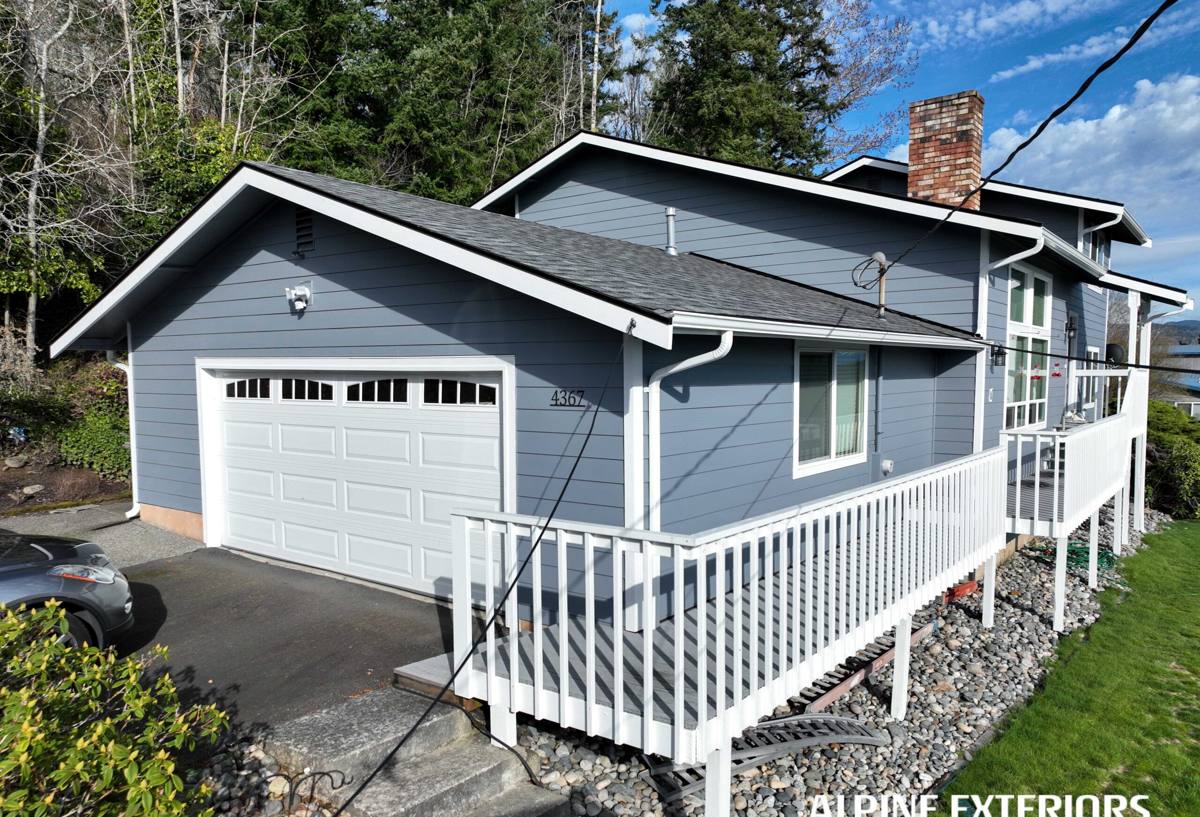
What Actually Counts as Storm Damage Around Here
Whatcom County storms rarely bring the hail damage you'd see further east. What we see instead:
- Wind uplift — shingles or shakes lifted, cracked, or torn loose along ridges and edges, where wind pressure is highest
- Wind-driven rain intrusion — water pushed sideways under flashing, at valleys, or through gaps that would never leak in a normal vertical rain
- Falling debris — branch strikes and impact damage from the mature trees common around Samish properties
- Fastener and flashing failure — nails and metal flashing that were already corroding from salt air, finally giving way under wind load
- Moss-weakened decking — areas where trapped moisture from moss growth has softened the roof deck, so storm stress finds the weak spot first
That last two points are the ones a lot of repair estimates miss. A crew that isn't used to salt-air and moss-heavy roofs will fix the visible wind damage and never check whether corrosion or moisture had already compromised the area around it.
Signs You Need a Storm Damage Inspection, Not Just a Look From the Ground
After any significant wind event, it's worth getting eyes on the roof — not just the yard. Ground-level signs that warrant a closer inspection:
- Granules collecting in gutters or downspout splash areas
- Shingles or shake pieces in the yard, even just a few
- A new or worsening leak, stain, or damp spot on an interior ceiling
- Visibly lifted or missing shingles from the ground or a neighbor's upstairs window
- Metal flashing that looks bent, separated, or missing around chimneys, vents, or valleys
- Moss buildup that looks heavier or wetter than before the storm — a sign water is now pooling where it wasn't
None of these alone means you need a full roof replacement. Most storm damage on Samish homes is repairable if it's caught and addressed correctly — the issue is usually timing, not severity.
What a Correct Storm Damage Repair Actually Involves
Inspection Before Estimate
We don't quote storm repair off a photo or a drive-by. A proper assessment means getting on the roof, checking the storm-damaged area and the roof around it, and confirming whether the decking underneath is sound. In a salt-air, moss-prone area, skipping that step is how a homeowner ends up paying for the same repair twice.
Matching Materials, Not Just Covering the Gap
Storm repairs age visibly if the replacement shingles or shakes don't match the existing roof in type, weight, and weathering. We source material that matches as closely as possible, and we're upfront when an exact match isn't available — better to know that going in than be surprised later.
Flashing and Fastener Standards
Given how fast salt air corrodes standard fasteners, we use corrosion-resistant nails and flashing on repair work in Samish and similar coastal-influenced parts of Whatcom County. It costs a little more up front than standard hardware, and it's the difference between a repair that lasts and one that fails again in a year or two from the same corrosion that likely contributed to the original damage.
Sealing Against Wind-Driven Rain, Not Just Vertical Rain
A repair that only accounts for rain falling straight down will leak the next time wind pushes water sideways under an edge. Proper storm repair means checking flashing laps, valley overlaps, and edge details specifically for wind-driven exposure — the direction water actually travels during the storms that cause damage here in the first place.
Repair vs. Replace: How We Help You Decide
Not every storm-damaged roof needs full replacement, but some do. Here's how we walk homeowners through that decision honestly:
| Factor | Leans Toward Repair | Leans Toward Replacement |
|---|---|---|
| Extent of damage | Isolated area, single slope, or a few dozen shingles | Widespread damage across multiple slopes |
| Roof age | Under 10-12 years, or well within expected lifespan | Already near end of expected service life |
| Decking condition | Solid, dry decking under the damaged area | Soft or moisture-damaged decking found during inspection |
| Moss/moisture history | Moss has been managed, minimal trapped moisture | Long-term moss buildup with signs of underlying rot |
| Material match | Matching shingles or shakes are available | Discontinued material with no reasonable match |
| Insurance scope | Adjuster scope aligns with a targeted repair | Adjuster scope or damage pattern supports full replacement |
We'll tell you plainly which side of this table your roof falls on, and why — including when a repair is the right call even if a bigger job would be more profitable for us. That's a professional standard we hold ourselves to, not a sales pitch.
Our Process, Start to Finish
- Contact and scheduling — tell us what happened and what you're seeing; we schedule an inspection, prioritizing active leaks
- On-roof inspection — we document the damage, check surrounding areas and decking condition, and photograph findings for your records
- Written estimate — a clear scope of work and cost range, explained in plain terms, with repair vs. replace laid out honestly
- Insurance coordination if applicable — we can meet your adjuster on-site and provide documentation to support your claim
- Repair work — matched materials, corrosion-resistant fasteners and flashing, and attention to wind-driven rain paths
- Final walkthrough — we review completed work with you before calling the job done
Insurance Claims: What We Do and Don't Do
Many storm damage repairs on Samish homes involve a homeowner's insurance claim. We're not a public adjuster and we don't represent your insurance company, but we can:
- Document damage with photos and a written scope that supports your claim
- Meet an adjuster on the roof and point out damage that's easy to miss from the ground
- Provide a repair estimate that matches the actual scope of damage — not inflated, not padded
What we won't do is tell you what your policy covers or promise a claim outcome — that's between you and your insurer. What we can promise is an honest, accurate assessment of the roof itself.
Why It Matters That We Already Work in Samish
Storm damage repair isn't just about knowing how to replace a shingle. It's about knowing what this specific stretch of Whatcom County throws at a roof — the salt air off the water, the moss season that starts earlier and lasts longer than it does further inland, and the wind direction that tends to drive rain into the same vulnerable spots year after year. A crew that already works this area brings that pattern recognition to every inspection, which means fewer surprises, fewer missed problem areas, and repairs that are built for the conditions they'll actually face, not generic ones.
Keeping a Repaired Roof From Becoming a Repeat Job
A few maintenance habits go a long way toward protecting a roof that's just been storm-repaired in a Samish-type climate:
- Have moss growth cleared and treated before it becomes heavy enough to trap moisture
- Keep gutters and downspouts clear so wind-driven rain has somewhere to go
- Trim back branches that overhang the roofline, especially near flashing and valleys
- After any major windstorm, do a ground-level visual check for debris, lifted shingles, or granule loss
- Have flashing and fastener condition checked periodically — salt-air corrosion is gradual and easy to miss until it fails
If your Samish home took storm damage, or you're just not sure whether recent weather left a mark worth worrying about, we're happy to take a look. Reach out for a free, no-pressure estimate using the form below.