 Whatcom County
 Why Sehome's Climate Is Hard on Siding
Sehome sits in the part of Whatcom County that gets the full package of Pacific Northwest weather: damp air moving off the water, long stretches of steady rain rather than short downpours, and short winter days that keep exterior surfaces wet for hours after a storm has already passed through. That combination is exactly what breaks down siding that isn't built or installed for it. Wood-based products swell and check. Vinyl goes brittle and gaps at the seams. Paint film on the wrong substrate fails years ahead of schedule.
The other factor homeowners in this area underestimate is moss and algae growth. Whatcom County's mild, wet winters and shaded lots create ideal conditions for organic growth to take hold on north-facing walls, under eaves, and anywhere siding stays damp longer than it can dry. Left alone, that growth holds moisture against the wall system and accelerates whatever damage the rain and salt-laden air are already doing.
What Fiber Cement Siding Needs to Do Right Here
Moisture Management, Not Just Moisture Resistance
Good siding in Sehome isn't just water-resistant on its face — it has to manage the moisture that gets past the face. That means a functioning drainage plane behind the siding, proper flashing at every horizontal transition, and enough of a gap for water that does get behind the cladding to find its way back out instead of sitting against the sheathing.
Resistance to Organic Growth
A dense, factory-finished fiber cement panel sheds moss and algae far better than a porous or fibrous surface. The finish matters as much as the substrate — a coating that's baked on and cures hard resists the kind of surface pitting that gives moss something to grip.
Standing Up to Salt-Laden Air
Homes closer to the water deal with airborne salt that corrodes exposed fasteners, pits softer metals, and degrades some paint systems faster than inland exposure would. Material choice and hardware choice both need to account for that.
Why We Install Only James Hardie Fiber Cement
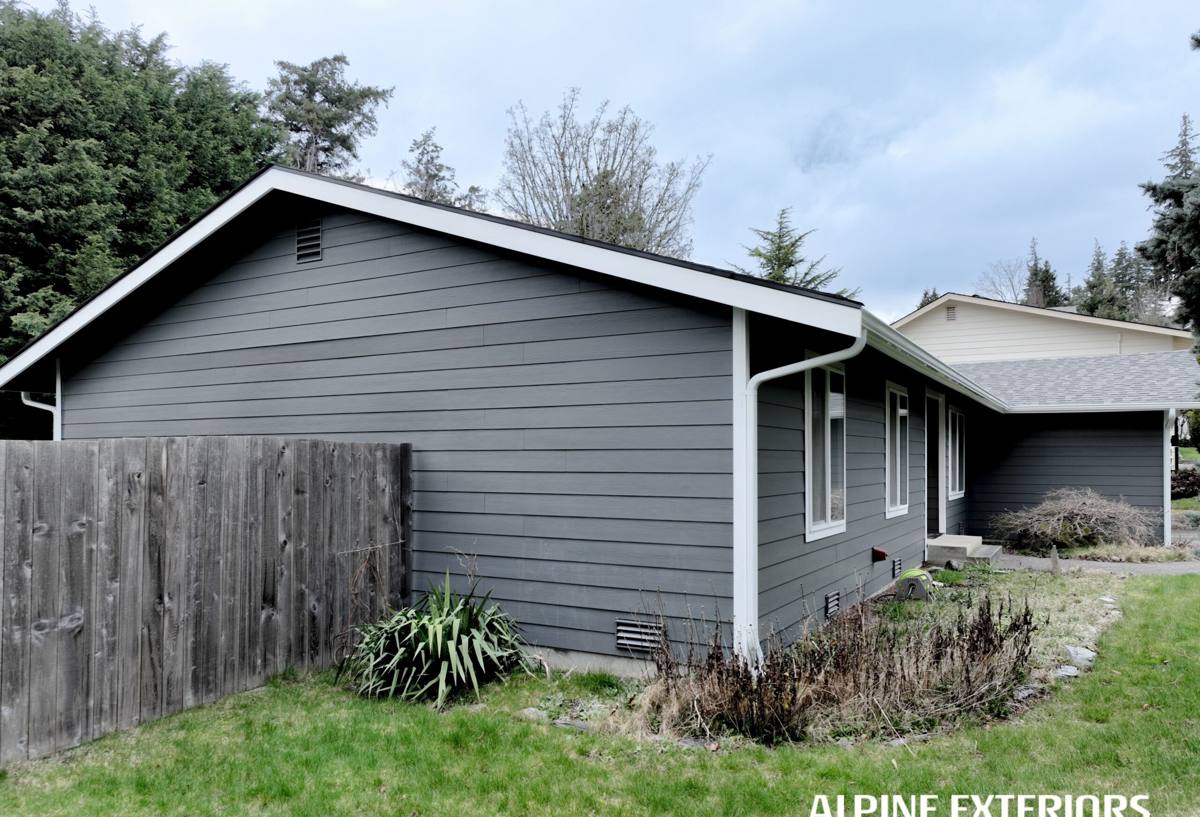
We install James Hardie exclusively, and in this climate that's not a brand preference — it's a practical decision. Hardie's HZ5 product line is engineered specifically for wet, freeze-thaw-prone climates like ours, with a formulation and factory finish designed to hold up to sustained moisture exposure rather than just shrug off an occasional storm. The ColorPlus finish is baked on in a controlled factory environment, which gives it more consistent coverage and better long-term color retention than field-applied paint on other substrates. Hardie also backs its siding with a strong, transferable non-prorated warranty on the substrate, plus a separate warranty on the ColorPlus finish — protection that matters when a product is going to spend decades absorbing Whatcom County weather.
We don't install LP SmartSide, vinyl, primed wood, or cedar. Each of those has real strengths in the right application, but none of them hold up to this specific combination of salt air, driving rain, and a moss season that can run from October through April the way properly installed Hardie fiber cement does. Standardizing on one product also means our crews are installing the same system on every job, which is where the real quality control happens.
Signs a Sehome Home Needs New Siding
Fiber cement is durable, but the siding it's replacing usually isn't. Here's what tends to show up first on homes in this area:
- Soft or spongy spots when you press on the siding, especially near the bottom courses and around window trim
- Persistent moss or dark algae staining that comes back within weeks of cleaning
- Paint that's peeling, bubbling, or chalking heavily rather than just fading evenly
- Visible warping, cupping, or separation at panel seams
- Rot or discoloration at inside corners, under windows, or anywhere two roof planes meet the wall
- Interior signs — musty smells, peeling interior paint, or warm-season condensation near exterior walls — that point to moisture getting through
Any one of these on its own might just need a repair. Several at once, especially combined with an original install that's 20-plus years old, usually means it's time to talk about full replacement rather than patching.
What a Correct Installation Involves
Drainage Plane and Rainscreen Gap
Before a single piece of siding goes up, the wall needs a continuous weather-resistant barrier and, in a climate like ours, a drainage gap behind the cladding. This is the single biggest factor in whether siding lasts 10 years or 40 — it's invisible once the job is done, which is exactly why it's the step most often shortcut by crews that don't specialize in this work.
Flashing at Every Penetration
Windows, doors, hose bibs, light fixtures, deck ledgers — every place something interrupts the wall plane needs flashing detailed so water sheds outward and downward, never backward into the wall. In a region with as much annual rainfall as Whatcom County sees, sloppy flashing is where almost every serious moisture failure starts.
Fastening and Clearances
Hardie specifies fastener type, spacing, and embedment depth for a reason — get it wrong and you compromise both the warranty and the wind and moisture performance of the whole system. Correct installation also keeps siding held up off decks, patios, and grade by the manufacturer's minimum clearance, so splash-back and standing water don't sit against the bottom edge.
Joints, Caulking, and Touch-Up
Butt joints get treated with the right sealant or covered with proper flashing — not just caulked and hoped for. Any field-cut edges get sealed and touched up with matching ColorPlus paint so the factory finish's protection isn't compromised at the one place it's most vulnerable.
Our Process for Sehome Projects
The steps below are consistent whether we're re-siding a full exterior or replacing a damaged section, and they're built around catching problems before they get covered up.
- On-site assessment — we walk the exterior, check for soft sheathing, evaluate existing flashing and drainage, and take real measurements rather than working off a rough estimate.
- Moisture and substrate check — anywhere we suspect water has already gotten behind the old siding, we check the sheathing underneath before quoting the job, not after we've started tearing into it.
- Prep and removal — old siding, trim, and any compromised sheathing come off, and we repair or replace framing and sheathing as needed before anything new goes on.
- Weather barrier and drainage plane — a continuous water-resistive barrier goes on first, with a drainage gap built in behind the new siding.
- Flashing and trim — all windows, doors, and penetrations get properly flashed before siding installation begins.
- Hardie installation — panels or planks go up to manufacturer fastening specs, with correct clearances at grade, decks, and roof lines.
- Final detailing — joints sealed, cut edges touched up, trim caulked, and a final walk-through with the homeowner before we call the job done.
Cost Factors for Fiber Cement Siding in Whatcom County
Every home is different, but the variables that move the price on a Sehome fiber cement project are consistent. This isn't a quote — it's a guide to what actually drives cost up or down.
| Factor | Why It Matters |
|---|---|
| Home size and wall complexity | More corners, gables, and dormers mean more cutting, more trim, and more labor hours per square foot |
| Condition of existing sheathing | Rot or moisture damage found during tear-off adds repair work before new siding can go on |
| Siding profile chosen | Lap siding, panel systems, and shingle-style Hardie products differ in material and labor cost |
| Trim and accent work | Window and door trim, fascia, and accent bands add material and installation time |
| Access and site conditions | Steep lots, tight setbacks, or limited equipment access can add labor time |
| Color and finish selection | Factory ColorPlus finishes vary slightly in cost by line and color depth |
Because fiber cement is a decades-long investment, it's worth thinking in terms of cost per year of service rather than sticker price alone — a correctly installed Hardie system typically outlasts cheaper alternatives by a wide enough margin to close that gap and then some.
Maintenance and Longevity
One of the real advantages of factory-finished fiber cement is how little upkeep it needs compared to painted wood siding — but "little" isn't "none," especially in a climate that stays damp as much of the year as Whatcom County does.
- Rinse the exterior annually to keep moss and algae from establishing, especially on shaded or north-facing walls
- Keep gutters clear so overflow doesn't run down the siding face repeatedly in the same spot
- Trim back vegetation and shrubs so siding gets airflow and sunlight to dry between rain events
- Inspect caulking at trim and joints every couple of years and refresh it before it fails, not after
- Watch for any hairline cracking at cut edges or corners and have it touched up promptly
- Address any signs of moisture — soft trim, staining, interior musty smells — right away rather than waiting for a bigger problem
None of this is heavy maintenance. It's the kind of periodic attention that, done consistently, lets a correctly installed Hardie system reach the long end of its service life instead of the short end.
Why Hire a Crew That Already Works in Sehome
Siding installation looks similar on paper everywhere, but the details that determine whether a job lasts are regional. A crew that already works in Whatcom County knows how much drainage gap this climate actually calls for, understands local permitting expectations, and has already seen what happens to homes here when flashing or fastening gets shortcut. That's different from a crew that mostly works drier inland climates and treats every job the same way regardless of what the weather actually does to a wall.
Local experience also means faster, more accurate estimates, fewer surprises once a wall gets opened up, and a crew that's still around and reachable years later if a warranty question comes up. For a product meant to last 30-plus years, that continuity is worth as much as the installation itself.
If you're weighing your options for Sehome siding replacement or new construction, we're happy to walk your property, answer questions honestly, and put together a free, no-pressure estimate — no obligation, just a clear look at what your home actually needs.