 Whatcom County
 Why Siding Wears Out Faster in Cordata
Cordata sits in north Bellingham, close enough to Bellingham Bay and the Salish Sea that homes here deal with salt-tinged air on top of the standard Pacific Northwest rain load. Add in the low cloud cover and long damp stretches that keep exterior walls wet for days at a time, and siding in this part of Whatcom County is working harder than siding in a drier inland climate. A product or installation detail that would hold up fine somewhere dry can fail here in a fraction of the time.
Salt Air and Fasteners
Salt-laden air speeds up corrosion on anything metal — nail heads, trim flashing, hose bib penetrations, light fixture mounts. When those small metal points corrode and the seal around them breaks down, water gets behind the siding long before the siding itself shows obvious damage. This is one reason we pay close attention to fastener and flashing material, not just the siding panel itself.
Driving Rain and Wind
Fall and winter storms in this part of Washington don't just fall straight down — wind pushes rain sideways into seams, laps, and trim joints. A siding system that isn't installed with the right overlaps, gaps, and a properly detailed weather-resistive barrier underneath will eventually let that wind-driven moisture find its way to the sheathing, even if the surface looks fine.
A Long Moss and Algae Season
Shaded, north-facing walls and anything under tree cover stay damp for months at a stretch, which is exactly what moss and algae need to take hold. Some siding materials absorb and hold that moisture, giving growth something to root into; others shed it. Over years, the difference shows up as staining, soft spots, and paint failure on one material and a simple rinse-off on another.
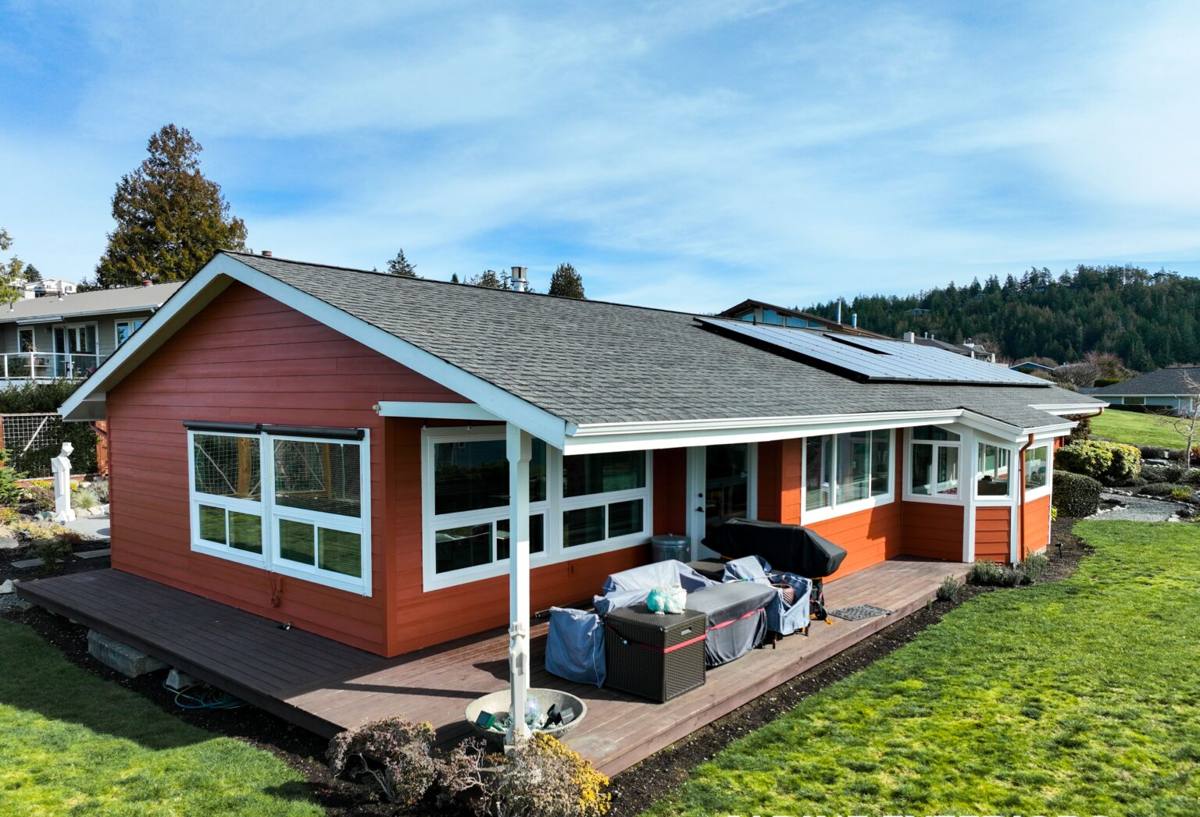
Signs a Cordata Home Needs Replacement, Not Just Repair
Not every siding problem calls for a full tear-off. But when several of these show up together, patching usually just delays a bigger repair bill:
- Soft, spongy, or crumbling spots when you press on the siding, especially near the bottom courses or under windows
- Paint or caulk that keeps failing within a year or two of being redone, even in the same spots
- Visible cupping, buckling, or gaps opening up at the laps or corners
- Persistent moss or dark staining that comes back within weeks of cleaning
- Rising energy bills with no other clear cause, which can point to a compromised moisture barrier
- Siding that's original to a home built more than 20-25 years ago, particularly wood-based products
If you're only seeing one or two of these in a small area, a repair may genuinely be the right call — we'll say so on the estimate rather than push a full replacement you don't need yet.
What a Correct Siding Replacement Job Involves
Tear-Off and a Real Sheathing Inspection
Removing the old siding is also the only real chance to see what's happening underneath. We check the sheathing for soft spots, rot, and past water damage before anything new goes up. Skipping this step and installing new siding over hidden problems is one of the most common ways a "new" siding job fails within a few years.
The Weather-Resistive Barrier and Flashing
Given how much wind-driven rain this area sees, the house wrap and flashing details matter as much as the siding itself. Every window, door, and penetration needs to be flashed so water sheds outward and down, never inward. This is the layer that does the real waterproofing work — the siding is the second line of defense, not the first.
Installation to Manufacturer Spec
Fiber cement siding has specific requirements for fastener spacing, clearance above grade and roof lines, gapping at butt joints, and caulking at penetrations. These specs exist because manufacturers have tested what actually holds up in wet climates. Installing "close enough" instead of to spec is how warranties get voided and how good products fail early.
Trim, Caulking, and Finish Work
The last stretch of a job — trim boards, corner details, and caulking — is also where a lot of crews cut corners because it's slower and less visible once painted. Done right, it's what keeps water from tracking in at the seams for the next few decades.
Why We Install Only James Hardie Fiber Cement
We get asked fairly often why we don't offer vinyl, LP SmartSide, cedar, or primed spruce as options. Each of those products has legitimate strengths, and we're not going to pretend otherwise. But once you weigh them against what this climate actually does to a house over 20-30 years, the trade-offs stopped making sense for us to install and warranty.
| Material | Moisture & Rot Resistance | Moss/Algae Resistance | Ongoing Maintenance | Fire Rating |
|---|---|---|---|---|
| Vinyl | Doesn't rot, but seams and edges can let moisture behind the panel undetected | Moderate; growth sits on the surface | Low, but can crack, fade, or warp over time | Combustible |
| LP SmartSide (engineered wood) | Good when sealed edges stay intact; vulnerable if cuts/joints aren't field-treated | Moderate | Periodic repainting and edge-sealing required | Combustible |
| Cedar / Primed Spruce | Natural material; absorbs moisture, prone to rot without diligent upkeep | Lower; organic material feeds growth | High — regular refinishing needed | Combustible |
| James Hardie Fiber Cement | Engineered not to absorb water the way wood-based products do | Higher; factory finish resists staining better over time | Low — no repainting cycle with ColorPlus finish | Non-combustible |
James Hardie's fiber cement is engineered specifically to hold up to moisture rather than just resist it cosmetically, and their factory-applied ColorPlus finish is baked on under controlled conditions instead of field-painted, which is a meaningful difference in a climate that rarely gives you a long dry stretch to paint in. Hardie also makes climate-engineered HZ product lines built for regions like ours, and backs the product with a strong, transferable warranty. That combination — plus the fact that it's a non-combustible material — is why we standardized on it rather than carrying multiple product lines.
Our Process, Start to Finish
- Site visit and assessment: We walk the exterior, check for the warning signs above, and get a real look at what's driving the need for replacement.
- Product and color selection: We go over Hardie's plank profiles, textures, and ColorPlus color options so you're choosing based on what actually fits the house.
- Written estimate: A clear scope and price before any work starts — no vague allowances.
- Tear-off and sheathing check: Old material comes off and we inspect what's underneath before covering it back up.
- Weather barrier and flashing: Installed and detailed around every window, door, and penetration.
- Siding installation to spec: Correct fastener pattern, clearances, and joint gapping.
- Trim, caulking, and cleanup: Final detailing, site cleanup, and a walk-through with you.
- Warranty registration: Your Hardie product warranty gets registered so it's on file if you ever need it.
What Siding Replacement Costs in Cordata
Every home is different, and we'll only give you a real number after seeing the house, but these are the main factors that move the price up or down:
| Cost Factor | Why It Matters |
|---|---|
| Total square footage | The most direct driver of material and labor cost |
| Condition of existing sheathing | Rot or water damage found during tear-off adds repair work before new siding can go on |
| Home style and trim complexity | Multiple gables, dormers, and trim details take more time to flash and finish correctly |
| Accessibility | Steep sites, tight setbacks, or multi-story walls affect staging and labor time |
| Siding profile and color | Some Hardie profiles and ColorPlus colors cost more than the standard lineup |
| Removal and disposal of old siding | Volume and type of the material being torn off affects disposal cost |
As a general rule, full siding replacement is a mid-five-figure investment on an average-sized home, with the range swinging based on the factors above. We'd rather walk your specific property and give you a number grounded in what we actually see than quote a figure that doesn't hold up once we're on site.
Why a Crew That Already Works Cordata and Whatcom County Matters
Local experience shows up in details that are easy to miss from a general contractor bid. A crew that's worked this part of Whatcom County has already seen how wind-driven rain behaves against different home orientations, which flashing details actually stop water here versus in a drier climate, and what moss and algae patterns look like on local homes years after installation. Permitting and inspection expectations are also easier to navigate when you've already been through them locally. None of that shows up as a line item on an estimate, but it shows up in whether the job is still performing well a decade later.
Keeping Hardie Siding Looking Right After Installation
One of the practical advantages of ColorPlus-finished fiber cement is how little upkeep it asks for compared to wood-based siding. You're not on a repainting cycle. That said, a few habits go a long way in this climate:
- Rinse off moss, pollen, and dirt buildup once or twice a year, especially on shaded or north-facing walls
- Keep gutters clear so overflow isn't running down the siding face
- Check caulking at trim joints and penetrations every couple of years and touch up as needed
- Trim back vegetation that keeps a section of wall in constant shade and dampness
None of this is heavy maintenance — it's the kind of occasional upkeep that keeps a correctly installed system performing the way it's designed to for decades.
If your Cordata home's siding is showing any of the signs above, or you're just planning ahead, we're happy to walk the property and give you a straight, no-pressure assessment and estimate — use the form below to get started.