 Whatcom County
 Windows Built for South Hill's Weather, Not Just Its Style
South Hill homes sit close enough to the water and the hillside tree cover that windows here take a beating most inland houses never see. Salt-tinged air off the bay works into aluminum hardware and bare wood sills over time. Driving rain — the kind that comes in sideways during a fall or winter storm — tests every seal, flashing detail, and sill pan on a house. And the long stretch of gray, damp months that defines a Whatcom County year means any window with a weak point stays wet far longer than it would in a drier climate. Moss doesn't just grow on roofs here; it finds a foothold in neglected window sills, cladding gaps, and anywhere water sits instead of draining.
Custom windows for a South Hill home aren't about matching a catalog size — they're about solving for this specific set of conditions: correct flashing sequence, materials that don't corrode or rot under sustained moisture, and installation details that get water out instead of trapping it against your framing. That's the standard we hold every South Hill window job to.
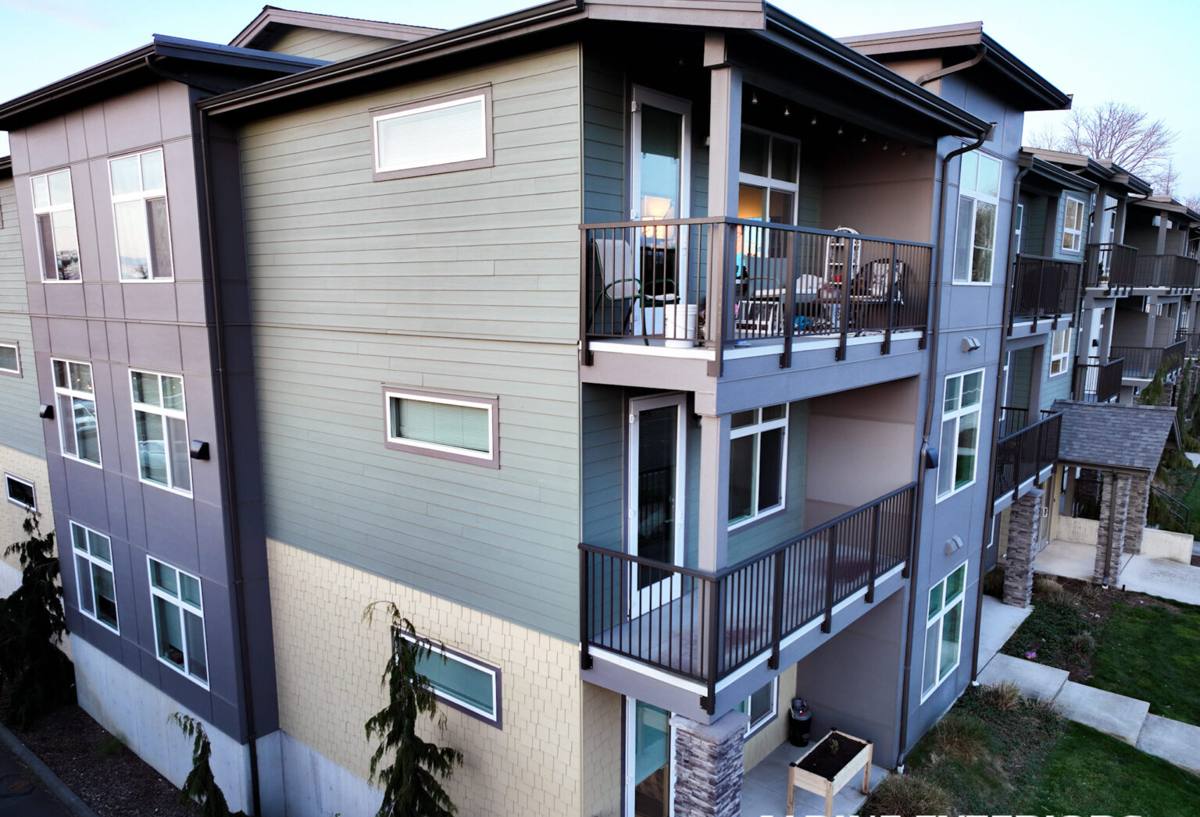
What "Custom" Actually Means on a Job Like This
Custom windows get sold as an upgrade in trim, glass, or grid pattern. That's part of it, but on the exterior side, custom means the window and its installation are built to the actual opening and the actual wall assembly in front of us — not a generic retrofit kit forced into place.
Where This Matters Most in Whatcom County
- Odd or out-of-square openings — common in older South Hill homes where framing has settled over decades.
- Wall assemblies with existing moisture history — if a previous window leaked, we address the sheathing and framing underneath, not just swap the unit.
- Sill and head flashing sized for real rain volume — a builder-grade flashing detail that works in a dry climate can fail here in the first heavy fall storm.
- Frame material matched to sun exposure and salt air exposure — a west- or south-facing wall on an elevated South Hill lot gets more UV and more wind-driven moisture than a sheltered north wall, and the window spec should reflect that.
Signs a South Hill Home Needs Window Attention
Most homeowners call us after noticing one of a handful of warning signs. None of these mean you need to replace every window in the house immediately, but each one is worth having looked at before the next wet season.
- Condensation building up between the panes, not just on the inside surface — a sign the seal has failed.
- Soft or discolored wood trim around the window frame, especially on the sill.
- Visible moss or dark streaking at the corners of the frame or where the window meets the siding.
- A draft you can feel with your hand near the frame on a windy day.
- Difficulty opening, closing, or locking a window that used to operate smoothly — often a sign the frame has swelled or shifted.
- Paint or finish that's peeling from the inside face of the frame, which usually points to moisture getting in from outside.
Frame Material: What Holds Up in This Climate
We install several window materials, and the right one depends on the home's style, budget, and how exposed that particular wall is. Here's how the common options actually perform under South Hill conditions — salt-tinged air, heavy rain, and long damp stretches.
| Material | How It Handles This Climate | Maintenance Burden | Typical Fit |
|---|---|---|---|
| Vinyl | Won't rot or corrode; handles moisture well; can expand/contract with temperature swings | Low — occasional cleaning | Most homes, budget-conscious upgrades |
| Fiberglass | Very stable in wet, salt-air conditions; resists warping better than vinyl | Low | Higher-exposure walls, longer-term value |
| Wood-clad (exterior aluminum or vinyl over wood core) | Good if flashing and cladding seams are done right; the wood core is the risk point if water gets past the cladding | Moderate — interior wood finish upkeep | Homes prioritizing interior wood aesthetics |
| Bare aluminum | Prone to corrosion in salt-tinged coastal air over time; thermally weak without a thermal break | Higher | We generally steer clients away from this for South Hill exteriors |
We're not against wood-clad or aluminum windows as a category — the trade-off is real and some homeowners have good reasons to choose them. But we'll always walk you through the maintenance and moisture-management commitment that comes with it before you sign off, rather than let you find out the hard way in year six.
Glass Packages Worth Considering
South Hill's marine layer and low winter sun angle make glass performance worth a real conversation, not an afterthought. Double-pane, low-E glass is standard on most jobs we do here — it cuts heat loss through the long gray months and reduces interior condensation, which matters when a house sits in consistently damp air for weeks at a time. Triple-pane is worth the added cost on north-facing rooms or homes right along more exposed stretches near the water, where wind load and heat loss are both higher.
Our Installation Process
The window unit itself is only part of the job. How it's installed determines whether it performs for fifteen years or starts leaking in three. Here's the sequence we follow on South Hill installs:
- On-site assessment. We check the existing opening, framing condition, and any signs of past water intrusion before quoting anything.
- Removal and inspection. Once the old window is out, we inspect the sheathing and framing underneath. If there's rot or damage, we address it before the new window goes in — installing a new window over a compromised opening just hides the problem.
- Sill pan installation. A properly sloped sill pan gives any water that gets past the window a way out, instead of letting it sit against the framing.
- Flashing, in the correct order. Sill, jamb, then head flashing, integrated with the home's existing weather-resistive barrier so water sheds down and out, shingle-style, at every layer.
- Window setting and shimming. The unit gets set level, plumb, and square, then shimmed and fastened per manufacturer spec — not just caulked into place.
- Insulation and air sealing. The gap between the window frame and the rough opening gets properly insulated and sealed, not overfilled with expanding foam that can bow the frame.
- Exterior trim and sealant. Final trim work and a quality exterior sealant bead, applied at the right joints — not everywhere, which can actually trap moisture instead of releasing it.
- Walkthrough. We check operation, look for daylight gaps, and confirm the finish work meets our standard before we call the job done.
What Drives Cost on a South Hill Window Job
Every job is different, so we won't put a number on a page that can't account for your home's actual condition. What we can tell you is what tends to move the price up or down, so an estimate makes sense when you get one.
| Factor | Why It Matters |
|---|---|
| Frame material | Vinyl is generally the most budget-friendly; fiberglass and wood-clad cost more up front |
| Number and size of openings | Larger openings and specialty shapes (bay, arched, oversized) take more material and labor |
| Condition of existing framing | Rot repair discovered during removal adds time but prevents a bigger problem later |
| Wall exposure | Higher-exposure walls may warrant a more moisture-resistant material or added flashing detail |
| Glass package | Triple-pane and specialty coatings cost more than standard double-pane low-E |
| Access and site conditions | Second-story or hard-to-reach windows can add labor time |
Why Hire a Crew That Already Works South Hill
Window installation isn't complicated in theory — it's the details that separate a job that lasts from one that fails quietly behind the trim. A crew that's already worked homes in this part of Whatcom County has seen how the local rain patterns, elevation, and building stock here actually behave, not just what a manufacturer's install guide says on paper.
That local familiarity shows up in practical ways: knowing which older South Hill homes tend to have outdated flashing details that need extra attention, understanding how wind-driven rain moves across a hillside lot compared to a flat one, and having a working relationship with local permitting requirements so your project doesn't stall waiting on paperwork. It also means we're not learning on your house — we're applying what's already worked on homes like yours nearby.
Questions Worth Asking Any Contractor Before You Hire
- Are you licensed and insured to do exterior window work in Washington State?
- Will you inspect and address the framing underneath, not just swap the window unit?
- What's your flashing sequence, and can you explain why you do it that way?
- What warranty covers the installation itself, separate from the manufacturer's product warranty?
- Can you walk me through how you'd handle a wall with signs of past water intrusion?
- Do you provide a written, itemized estimate before work starts?
Keeping Your Windows Performing Once They're In
Even a correctly installed window benefits from a little seasonal attention in a climate like this. Rinse salt residue off frames and hardware a few times a year, especially after windier stretches. Keep an eye on exterior caulking and sealant lines — Whatcom County's freeze-thaw cycles and constant damp can break down sealant faster than in a drier region, and a small gap is easier to fix than the water damage it eventually causes. Clear any moss or debris building up in window tracks or sills before it holds moisture against the frame long-term.
If your South Hill home has windows showing their age, or you're planning a renovation and want the exterior done right the first time, we'd be glad to take a look. We offer free, no-pressure estimates — fill out the form below and we'll get back to you to schedule a time that works.