 Whatcom County
 Windows Built for South Hill's Weather, Not Just Its View
South Hill sits high enough to catch the wind and close enough to the water to catch the salt off it. That combination is tougher on windows than most homeowners realize. Salt air accelerates corrosion on hardware and frame fasteners. Driving rain off Bellingham Bay pushes water sideways into gaps that would stay dry in a calmer climate. And Whatcom County's long, wet moss season keeps exterior surfaces damp for months at a time, which matters a lot when the seal around a window is even slightly compromised.
We install windows across South Hill and the surrounding neighborhoods, and the pattern we see on service calls is consistent: it's rarely the glass that fails first. It's flashing that was never properly integrated with the siding, sealant that was applied instead of real weatherproofing, or a frame that was never shimmed and leveled correctly. This page covers what a correct window installation actually involves here, and why the details matter more in this climate than they would somewhere drier.
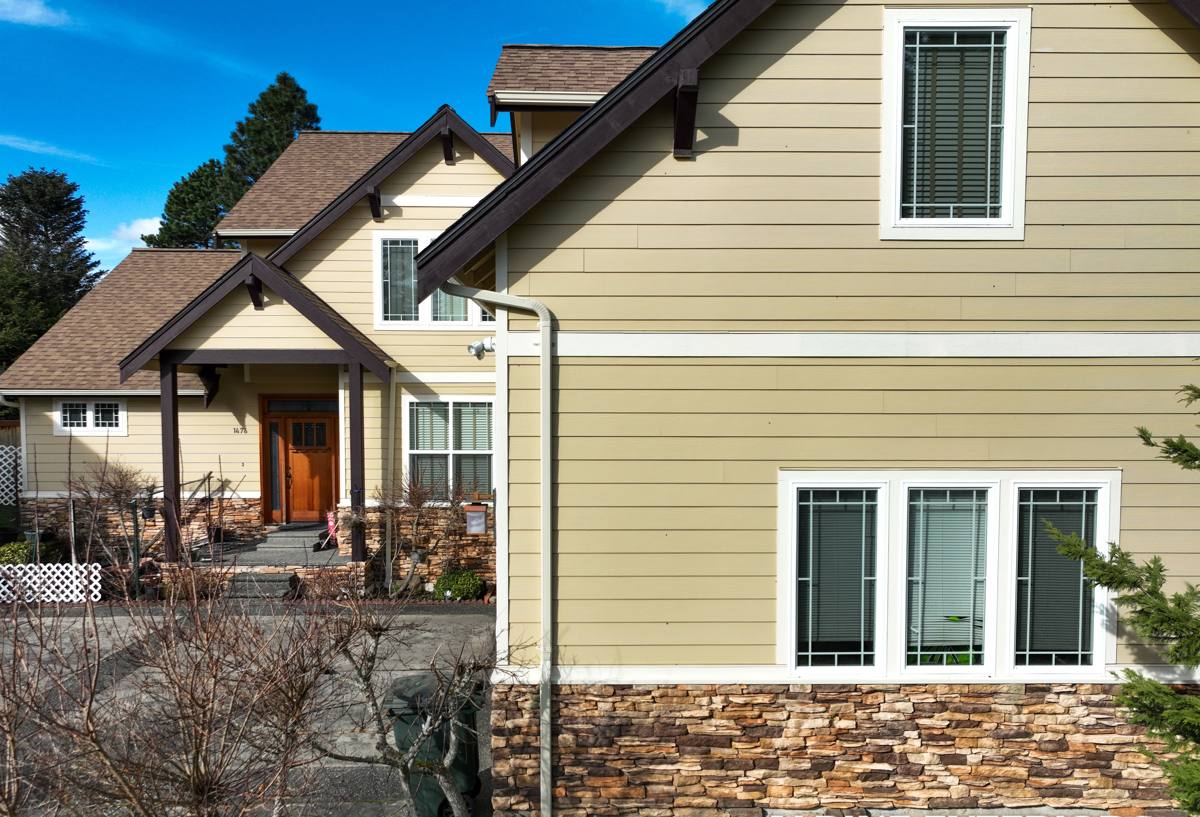
What South Hill's Climate Actually Does to Windows
Salt Air and Hardware Corrosion
Homes on South Hill's higher, more exposed lots take wind-driven salt air more directly than homes tucked into sheltered valleys elsewhere in the county. Over years, that salt works on anything metal — cheap cranks, hinges, screws, and fasteners that weren't rated for coastal exposure. It's a slow failure, which is exactly why it gets ignored until a window won't latch or close properly.
Driving Rain and Wind-Driven Water
Whatcom County storms don't always arrive straight down. Wind off the bay pushes rain sideways into wall assemblies, and a window that was only caulked around the edges — instead of properly flashed — will eventually let that water behind the trim. Once water gets behind a window instead of running off it, you're dealing with rot and hidden damage long before you see a stain inside.
Moss Season and Prolonged Moisture
The stretch of the year when everything stays damp — trim, siding, sills — is long here. Wood components that sit wet for extended periods without a chance to dry out are where rot starts, and it usually starts at the bottom corners of a window frame or sill first, because that's where water collects and lingers the longest.
What a Correct Window Installation Involves
A window installation isn't just fitting a new unit into an old opening. Done right, it's a sequence, and skipping steps is how leaks happen two or three years down the road instead of two or three months — which is exactly when a homeowner assumes it's fine.
- Opening inspection — checking the rough opening, sill, and surrounding framing for existing rot or water damage before anything new goes in
- Removal without collateral damage — pulling the old window and surrounding trim carefully, especially on siding types where matching or patching is harder
- Sill pan flashing — a proper drainage plane at the bottom of the opening so any water that does get in has somewhere to go besides your wall cavity
- Window flashing tape and integration — flashing the sides and top so it overlaps correctly with the weather-resistive barrier and siding, shingle-style, so water sheds outward and down
- Leveling, plumbing, and squaring — a window that's out of square will bind, won't seal evenly, and will wear its hardware unevenly over time
- Proper shimming and fastening — supporting the frame without over-compressing it, which can warp the sash and cause air leaks
- Low-expansion foam and backer rod at gaps — insulating the gap between frame and rough opening without using foam that can bow the frame
- Exterior sealant as a backup, not the primary defense — caulk should be the last line of defense, not the only one
- Interior and exterior trim reinstallation — finished cleanly and sealed at the right points, not all points
Any one of these steps done poorly can undermine the rest. This is why a window installation is a flashing and water-management job first, and a carpentry job second.
Our Process for South Hill Homes
1. On-Site Assessment
We start by looking at your existing windows and the wall assembly around them, not just measuring the openings. If there's already moisture damage, hidden rot, or a flashing problem from the original build, we tell you before we start, not after we open the wall up.
2. Product Discussion Based on Exposure
Not every wall of a house faces the same exposure. A wall that takes direct wind and rain off the bay needs different attention at the flashing details than a sheltered wall on the same house. We'll walk you through what that means for your specific home rather than applying a one-size answer.
3. Installation
We follow the flashing and sealing sequence above on every job, every window, regardless of whether it's one replacement or a whole-house project. It takes longer than a caulk-and-go install. That's the point.
4. Final Check and Cleanup
We test operation, check seals, and walk the job with you before we consider it done. If something doesn't operate smoothly or seal evenly, we fix it before we leave, not on a callback.
Frame Material Options and Trade-Offs
We install a range of window frame materials, and each has real trade-offs in this climate. We'll give you the honest version rather than pushing whatever's easiest to install.
| Frame Material | Coastal/Moisture Performance | Maintenance | Notes for This Climate |
|---|---|---|---|
| Vinyl | Good — won't rot or corrode | Low | Solid value option; quality varies a lot between manufacturers, so we're selective |
| Fiberglass | Very good — dimensionally stable in wet/dry cycles | Low | Handles temperature and moisture swings with less expansion/contraction than vinyl |
| Aluminum-clad wood | Good exterior protection, but interior wood core needs the seal to stay intact | Moderate | Attractive option, but installation quality around the seal matters more here than in drier regions |
| Wood (unclad) | Requires diligent maintenance in this climate | High | We're upfront that unclad wood exteriors need consistent upkeep to hold up to Whatcom County moisture |
We don't push a single brand or material on every homeowner. The right choice depends on your home's exposure, your maintenance appetite, and your budget, and we'll lay out the honest trade-offs so you can decide.
Cost Factors for South Hill Window Projects
We don't publish fixed pricing because window projects vary too much to make a flat number honest, but these are the factors that actually move the cost on a South Hill job:
| Factor | Why It Matters |
|---|---|
| Number of windows | Per-unit cost typically drops on larger projects |
| Frame material and glass package | Fiberglass and higher-performance glass packages cost more upfront than base vinyl |
| Existing rot or hidden damage | Framing or sheathing repair adds cost but is not optional if it's found |
| Wall exposure | Higher-exposure walls facing prevailing wind and rain may warrant extra flashing detail |
| Siding type around the opening | Some siding types are more labor-intensive to cut back and reintegrate cleanly |
| Access | Second-story or hard-to-reach windows take more time and equipment |
We'll give you a written estimate that breaks these out so you know what you're actually paying for, not just a lump sum.
Signs Your South Hill Home's Windows Need Attention
- Fogging or condensation between panes (a sign the seal has failed on a dual-pane unit)
- Difficulty opening, closing, or latching — often the first sign of hardware corrosion or a frame that's shifted
- Soft or discolored trim or sill wood around the window
- Visible daylight or a noticeable draft around the frame edges
- Musty smell near a window, which can indicate trapped moisture in the wall cavity
- Peeling paint or bubbling on interior trim near the window, often a sign of moisture intrusion from outside
Any one of these on its own isn't necessarily an emergency, but ignoring them through another wet season usually turns a window job into a window-plus-framing-repair job.
Why a Crew That Already Works in South Hill Matters
Window installation isn't a generic skill that transfers evenly across climates. A crew used to installing in a dry inland region will often under-flash a window because it's never had to deal with sustained wind-driven rain. A crew that works Whatcom County regularly knows to treat flashing and sill pan detailing as non-negotiable, because they've seen what happens on the service calls when it's skipped.
We're also familiar with South Hill's mix of home ages and construction styles, which affects what we find once an old window comes out. Knowing what's common in this neighborhood — and what to check for before we quote the job — means fewer surprises mid-project and a more accurate estimate up front.
Get a Straight Answer on Your Windows
If your windows are original to the house, showing signs of wear, or you're just planning ahead of another wet Whatcom County winter, we're happy to take a look and give you an honest read on what you actually need — whether that's a full replacement or just addressing a specific problem. Request a free, no-pressure estimate using the form below and we'll walk the job with you before recommending anything.