 Whatcom County
 Fairhaven Roofs Take a Different Kind of Beating
Fairhaven sits close to the water, which means the roofs here deal with a combination most inland neighborhoods never see: salt-laden air off Bellingham Bay, driving rain that comes in sideways during winter storms, and a moss season that stretches longer than almost anywhere else in Whatcom County. Any one of those on its own is manageable. Together, over years, they wear down flashing, loosen shingles, and open small gaps that a hard storm turns into a real leak.
That's the pattern we see over and over on storm calls in this neighborhood: a roof that was fine a month ago suddenly isn't, because wind and rain found a weak spot that moss or salt corrosion had already been working on quietly. Understanding that combination is the difference between a repair that actually holds and one that fails again next winter.
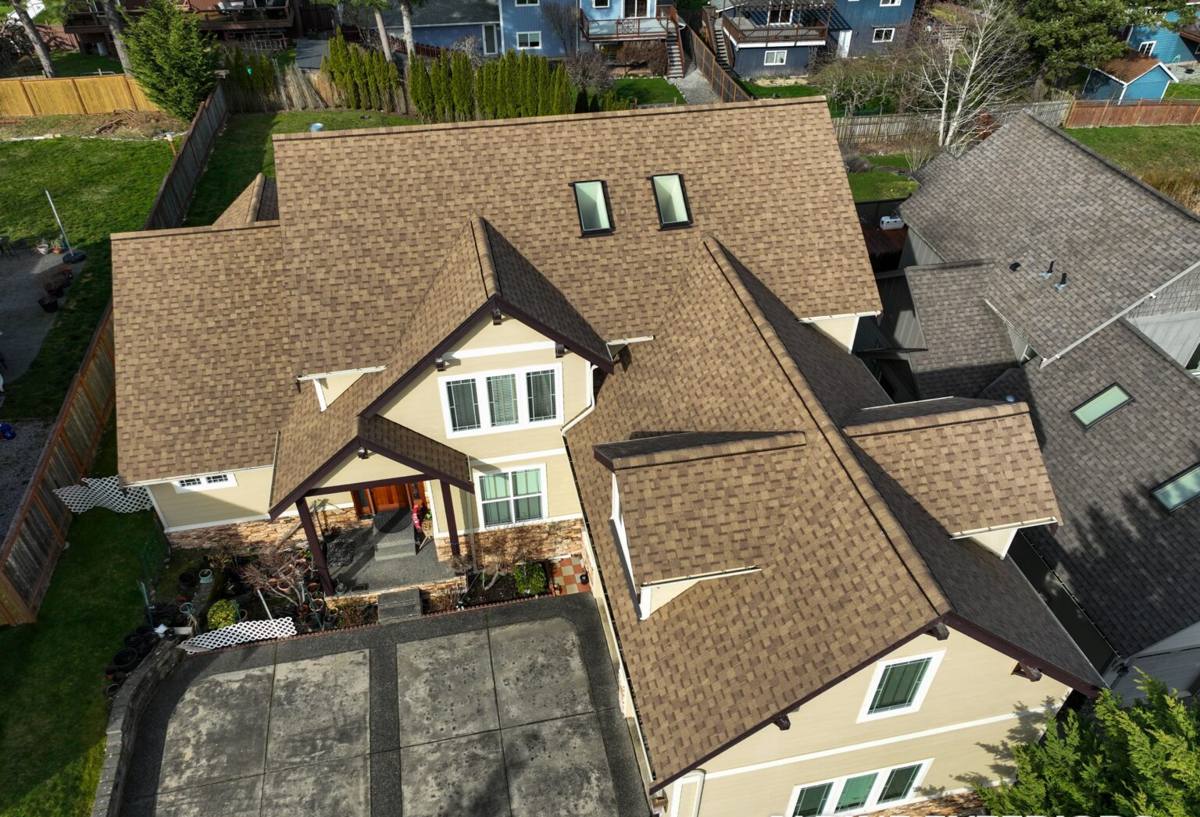
What Actually Counts as Storm Damage
Not every problem that shows up after a storm was caused by the storm. Sometimes wind just finishes off a roof that was already near the end of its service life. Knowing which is which matters for both the repair plan and, if it applies, an insurance claim.
Wind Damage
Sustained wind and gusts off the water can lift shingle tabs, crease them, or tear them off entirely, especially along ridges, edges, and any spot where a previous repair wasn't sealed as well as it should have been. Lifted shingles don't always look dramatic from the ground — a few tabs standing up slightly is enough to let wind-driven rain get underneath.
Impact and Debris Damage
Branches, fir cones, and blown debris are common in storms that roll through this part of the county. Impact damage can crack shingles, dent metal flashing, or puncture underlayment in ways that aren't obvious until you're actually up on the roof looking closely.
Moisture and Moss-Related Failure
This is the one that's easy to miss. A long moss season means organic growth holds moisture against the roof surface for months at a time. That moisture works its way under shingle edges and into fasteners, weakening the seal long before a storm ever arrives. When the storm hits, it's often just the trigger that reveals damage that moss and standing moisture already started.
Why Waiting Costs More Than the Repair Itself
A small leak after a storm rarely stays small. Water that gets under even a few square feet of compromised roofing will follow gravity and gaps, not a straight line — so the stain on your ceiling is often nowhere near where the actual damage is happening in the attic or wall cavity. Left long enough through a Whatcom County winter, that moisture leads to rotted decking, damaged insulation, and in some cases mold growth that costs far more to remediate than the original roof repair would have.
We'd rather look at a roof after a windstorm and tell you it's fine than have you find out in February that a small missed leak turned into a decking replacement.
What a Correct Storm Repair Involves
A storm repair done right isn't just swapping out the shingles you can see from the driveway. It follows a specific order:
- Full-roof inspection, not just the area you noticed the damage — wind damage is often worse a few feet away from the obvious spot.
- Temporary protection (tarping or emergency sealing) if there's active water intrusion, so nothing gets worse while repairs are scheduled.
- Decking check — pulling back damaged shingles and underlayment to confirm the plywood or sheathing underneath is sound before anything new goes down.
- Underlayment and flashing repair, since flashing around chimneys, vents, and valleys fails more often than the shingle field itself.
- Matched shingle or material replacement, installed with correct nailing pattern and sealant, not just tacked over the old layer.
- Cleanup and final inspection, including checking gutters for granule buildup or debris that came off during the storm.
Skipping the decking check is the most common shortcut we see from repairs that fail early — a beautiful new shingle over a soft, water-damaged deck buys you a year or two at most.
How We Handle a Storm Call in Fairhaven
Because we already work in this neighborhood and across Whatcom County, our process is built around getting eyes on the roof quickly without pressuring you into a decision before you're ready:
- You call or request an estimate, describe what you're seeing, and we schedule an inspection — sooner if there's active leaking.
- We inspect the full roof, not just the reported problem area, and document what we find with clear explanations, not just a quote.
- We tell you honestly whether it's a repair, a partial re-roof of the damaged section, or something that should wait — we don't upsell storm calls into full replacements they don't need.
- If you're filing an insurance claim, we provide the documentation and scope of damage your adjuster will need.
- We complete the work, clean the site, and do a final walk-through so you know exactly what was done.
Repair or Full Section Replacement?
Storm damage doesn't always mean you need to redo the whole roof — but sometimes a repair isn't the honest answer either. These are the factors that actually drive that decision:
| Factor | Points Toward Repair | Points Toward Replacement |
|---|---|---|
| Roof age | Under two-thirds of expected lifespan | Already near or past expected service life |
| Extent of damage | Isolated to one slope or section | Spread across multiple slopes or the ridge |
| Decking condition | Sound, dry sheathing found underneath | Soft, delaminated, or rotted decking |
| Shingle match | Similar shingles still available | Discontinued style leaves visible patchwork |
| Moss/moisture history | Isolated, recent exposure | Long-term moss damage across the roof |
Most single-storm damage on a roof that's otherwise in reasonable shape is a repair. It's roofs that were already carrying years of moss damage or salt-air wear where a storm often just accelerates a replacement that was coming anyway.
What We Use — and What We Don't
For storm repairs in a coastal, moss-prone area like this, we lean toward materials and methods that hold up to repeated wetting and drying rather than whatever looks best from the street. That means proper self-sealing shingles with correct fastener patterns, metal flashing sized and installed to actually shed water at valleys and penetrations, and underlayment rated for the moisture exposure this climate delivers.
We're selective about lower-cost repair shortcuts — things like surface-only patches or caulk-and-hope fixes over failed flashing. They can look fine for a season, but in an area with this much sustained moisture, they tend to fail again quickly, and by then the damage underneath is worse than when we started. Our standard is to fix the actual failure point, not just cover it.
Why Hiring a Crew That Already Works Fairhaven Matters
Roofing problems in this neighborhood aren't generic. A crew that mostly works drier, inland areas may not immediately recognize how far moss damage has spread under a shingle field, or may underestimate how much wind exposure a waterfront-adjacent roof actually takes compared to a roof a few miles inland. Local experience also means faster response after a county-wide storm event, since we're not driving in from out of the area to get to you.
It also matters for something less obvious: knowing what's normal wear for this climate versus what's actual storm damage. That distinction affects both the repair scope and how an insurance claim gets documented.
After the Repair: Keeping the Next Storm From Doing the Same Damage
A good repair only stays good if the roof is maintained for the conditions it's actually facing. A few habits go a long way in this climate:
- Clean gutters and downspouts at least twice a year — clogged gutters back water up under the roof edge during heavy rain.
- Have moss treated or removed before it spreads across a full slope, not after.
- Trim back overhanging branches that drop debris or hold moisture against the roof surface.
- Do a visual check after any major windstorm — lifted or missing shingles are easier to spot from the ground than you'd think.
- Get a roof inspection every year or two, even with no visible problems, so small issues get caught before the next storm season.
None of this is complicated, but it's the difference between a roof that handles Whatcom County winters for its full lifespan and one that needs repeat storm repairs.
If you've had storm damage in Fairhaven — or you just want an honest look at how your roof is holding up before the next system rolls in — we're happy to come take a look. Request a free, no-pressure estimate using the form below and we'll give you a straight answer about what your roof actually needs.