 Whatcom County
 Storm Damage Roofing in Sehome Isn't the Same Job as Everywhere Else
Sehome sits close enough to Bellingham Bay that its homes deal with a specific combination of weather stress: salt-laden air off the water, wind-driven rain that comes in sideways during winter storms, and a mossy, shaded canopy in the older, tree-lined parts of the neighborhood. A roof here doesn't fail the way a roof in a dry inland climate fails. It fails from the edges in, from moisture that gets pushed under shingles by wind rather than simply falling on top of them, and from organic growth that holds water against the roofing material long after a storm has passed.
Storm damage repair in this setting means more than replacing a few missing shingles. It means understanding how wind, rain, and moss interact on a Whatcom County roof, and repairing the roof in a way that holds up through the next storm season, not just until the next inspection.
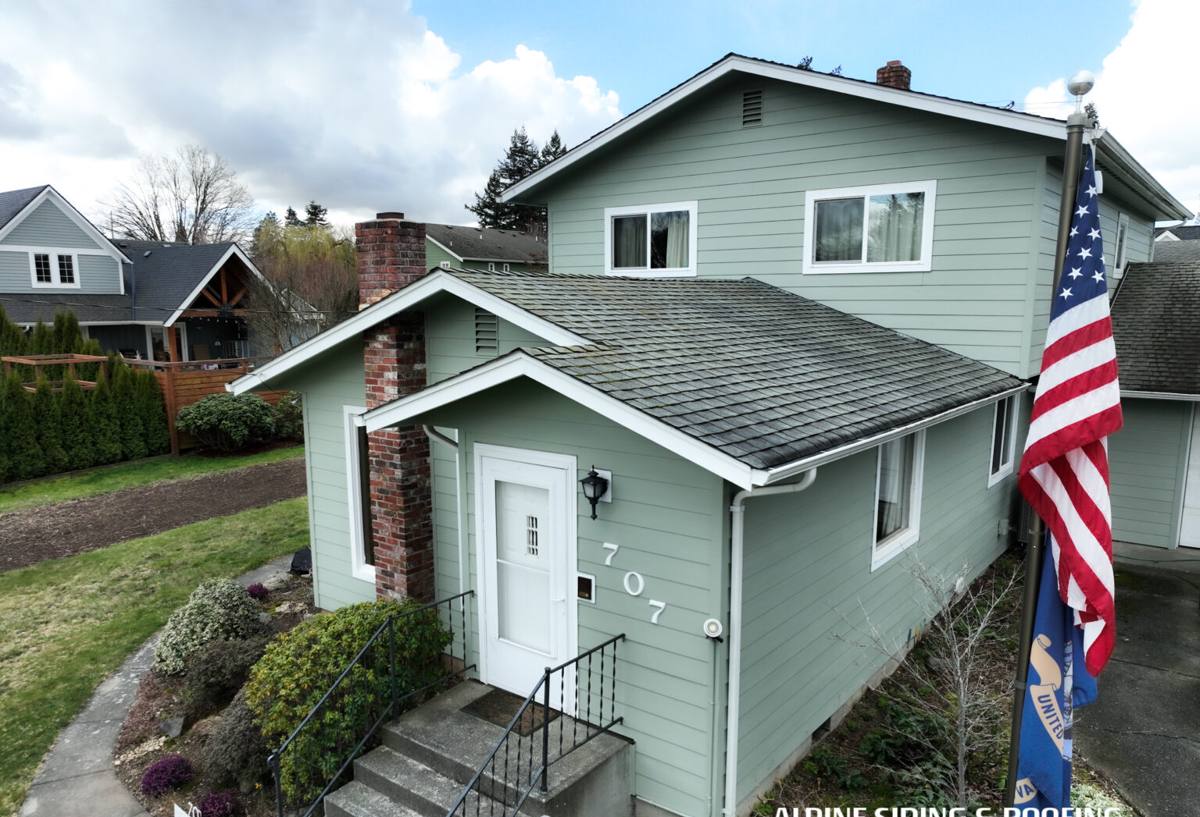
What Whatcom County's Climate Does to a Roof Over Time
Three regional factors drive most of the storm-related roof calls we see in and around Sehome, and they compound each other.
Salt Air
Homes closer to the water pick up airborne salt that accelerates corrosion on exposed metal roofing components — flashing, fasteners, drip edge, and vent caps. Corroded flashing is one of the most common hidden causes of a "sudden" storm leak. The metal has usually been weakening for years; a storm just finds the failure point.
Driving Rain
Whatcom County storms frequently bring wind alongside the rain, and wind-driven rain behaves differently than a straight downpour. It can be pushed sideways and even slightly upward under shingle edges, ridge caps, and around any roof penetration — vents, chimneys, skylights — where the seal has aged or where the original installation left a gap too small to notice in dry weather but wide enough for driven water.
Moss and Moisture Retention
Sehome's tree cover and the region's long damp season give moss a real foothold on north-facing and shaded roof slopes. Moss doesn't just look bad — it lifts shingle edges as it grows, holds water against the roofing surface long after the rest of the roof has dried, and traps debris that clogs valleys and gutters. A roof that's already compromised by moss growth has far less capacity to shed a storm's rainfall cleanly, which is why storm damage often shows up worst on the same slopes where moss has been building for a season or two.
Signs Your Sehome Roof Has Storm Damage
Some storm damage is obvious. A lot of it isn't — it shows up weeks later as a ceiling stain or a musty smell in an attic. Here's what we tell homeowners to check after any significant wind or rain event:
- Shingles that look lifted, curled, or creased, especially along roof edges and ridges
- Granules collecting in gutters or at the base of downspouts (a sign of shingle surface wear from wind abrasion)
- Visible gaps or bent sections in metal flashing around chimneys, vents, and skylights
- New or spreading moss patches, particularly on shaded or north-facing slopes
- Water stains on interior ceilings or in the attic, even faint or old-looking ones
- Sagging or soft spots when walking the attic decking (never walk the roof itself to check this)
- Debris — branches, needles, moss clumps — built up in valleys or gutters after a storm
- Daylight visible through the roof deck from inside the attic
Any one of these on its own might be minor. Two or three together usually means the roof needs a real inspection, not a patch.
What a Correct Storm Damage Repair Actually Involves
Inspection Before Anything Else
A proper storm damage assessment starts on the ground and in the attic before anyone gets on the roof. Interior water stains, insulation that's damp or matted, and daylight through the decking all tell us where to look first once we're up top. On the roof itself, we're checking not just the obvious damage but the condition of flashing, fastener corrosion, the state of the underlayment where it's exposed, and how moss or debris may be masking damage underneath.
Documentation for Insurance
If a storm event caused the damage, we document it thoroughly — photos of the specific damage, dated and organized — so homeowners have what they need if they choose to file an insurance claim. We're not the insurance adjuster and won't pretend to be, but a clear, honest damage record makes that process faster and less frustrating on your end.
Repair vs. Replacement — an Honest Read
Not every storm-damaged roof needs full replacement, and we don't default to recommending one. The right call depends on the roof's age, how much of the roofing system was affected, and whether the damage is isolated or a symptom of broader wear. We'll tell you plainly when a targeted repair is the sound choice and when a repair would just be a short-term fix on a roof that's past the point of patching.
Repair Approaches: Matching the Fix to the Damage
| Situation | Typical Approach | What It Addresses | Longevity Consideration |
|---|---|---|---|
| Isolated wind-lifted or missing shingles on an otherwise sound roof | Spot shingle replacement, resealing surrounding tabs | Restores the weather seal in the affected area | Good long-term fix if the rest of the roof is in solid condition |
| Corroded or storm-bent flashing around penetrations | Flashing replacement, not just re-caulking | Removes the actual failure point, not just the symptom | Caulk-only fixes typically fail again within a season or two |
| Moss-damaged slope with lifted shingles underneath | Moss removal, damaged shingle replacement, treatment to slow regrowth | Addresses both the storm damage and its underlying cause | Needs periodic moss maintenance to avoid repeat damage |
| Widespread damage across an aging roof | Full or partial re-roof | Resolves compounding age and storm damage at once | Avoids a cycle of repeated repairs on a roof near end of life |
We walk through this table's logic with every homeowner before recommending a scope of work — the goal is the least invasive repair that will genuinely hold, not the largest job we can sell.
Our Process, Start to Finish
- Initial contact and scheduling — we get basic details about the storm event and any visible or interior signs of damage.
- On-site inspection — ground, attic, and roof-level assessment, including flashing, moss condition, and decking.
- Written findings and options — what we found, what caused it, and what repair or replacement options make sense, with honest pros and cons of each.
- Documentation handoff — photos and notes you can use for an insurance claim if applicable.
- Scheduled repair — work performed with attention to matching existing materials where the roof is a repair rather than a full replacement.
- Final walkthrough — we show you what was done and what to watch for going forward.
Insurance Claims and Storm Damage
Many storm damage repairs in Whatcom County get filed as insurance claims, especially after a named storm event with documented high winds. We're glad to work alongside your adjuster and provide the documentation and access they need, but we always give the homeowner our own honest read of the damage first — before an adjuster's report shapes the conversation. That way you know what we'd recommend on the roof's merits, separate from what a claim will or won't cover.
Why a Crew That Already Works Sehome Matters
Roofing crews that work regularly in this specific part of Whatcom County develop a feel for how Sehome's tree cover, proximity to the bay, and older housing stock combine to affect a roof. That matters in practical ways: knowing which slopes in a shaded neighborhood are most prone to moss buildup, recognizing salt-air corrosion on flashing before it becomes a leak, and understanding how local wind patterns off the bay tend to hit roofs from a particular direction during winter storms. A crew unfamiliar with the area is starting from zero on all of that. A local crew starts already knowing what to check first.
There's also a simple practical benefit: a contractor based in and around Whatcom County can respond faster after a storm, when a tarp over exposed decking in the first 24 hours can be the difference between a contained repair and a much larger interior damage problem.
Preventing the Next Storm From Doing the Same Damage
Storm damage repair is also a chance to reduce how much damage the next storm causes. A few things make a real difference in this climate:
- Keeping gutters and valleys clear so wind-driven rain has somewhere to go instead of backing up under shingles
- Addressing moss while it's still light growth, rather than after it's lifted shingle edges
- Replacing aging flashing before it fails, especially on homes closer to the bay where salt air speeds up corrosion
- Trimming back overhanging branches that drop debris into valleys and keep roof sections shaded and damp
None of this eliminates storm risk entirely — no roof is stormproof — but it narrows the gap between "the roof handled it" and "the roof needs an emergency repair."
Get a Straightforward Look at Your Roof
If a recent storm has you wondering whether your Sehome roof came through it okay, or you've noticed any of the warning signs above, we're happy to take a look. The estimate is free, there's no pressure attached to it, and you'll get a plain-English explanation of what we find and what we'd recommend. Use the form below to get started.