 Whatcom County
 Building a Deck That Actually Holds Up in Sunnyland
Sunnyland sits in one of the more tree-shaded, moisture-heavy pockets of Bellingham, and that combination changes how a deck should be built here compared to a drier inland town. Whatcom County's marine climate means salt-laden air off Bellingham Bay, long stretches of driving rain through the fall and winter, and a moss season that can run for months if a deck doesn't get enough sun or airflow. A deck built to a generic national standard will often disappoint a homeowner here within a few years — cupped boards, green film on the walking surface, corroded hardware, or a substructure that's rotting quietly underneath a deck that still looks fine on top.
Building correctly for this specific area means treating moisture management as the central design problem, not an afterthought. Everything from the footing depth to the fastener coating to the gap between boards should be chosen with Whatcom County's weather in mind, not just national code minimums.
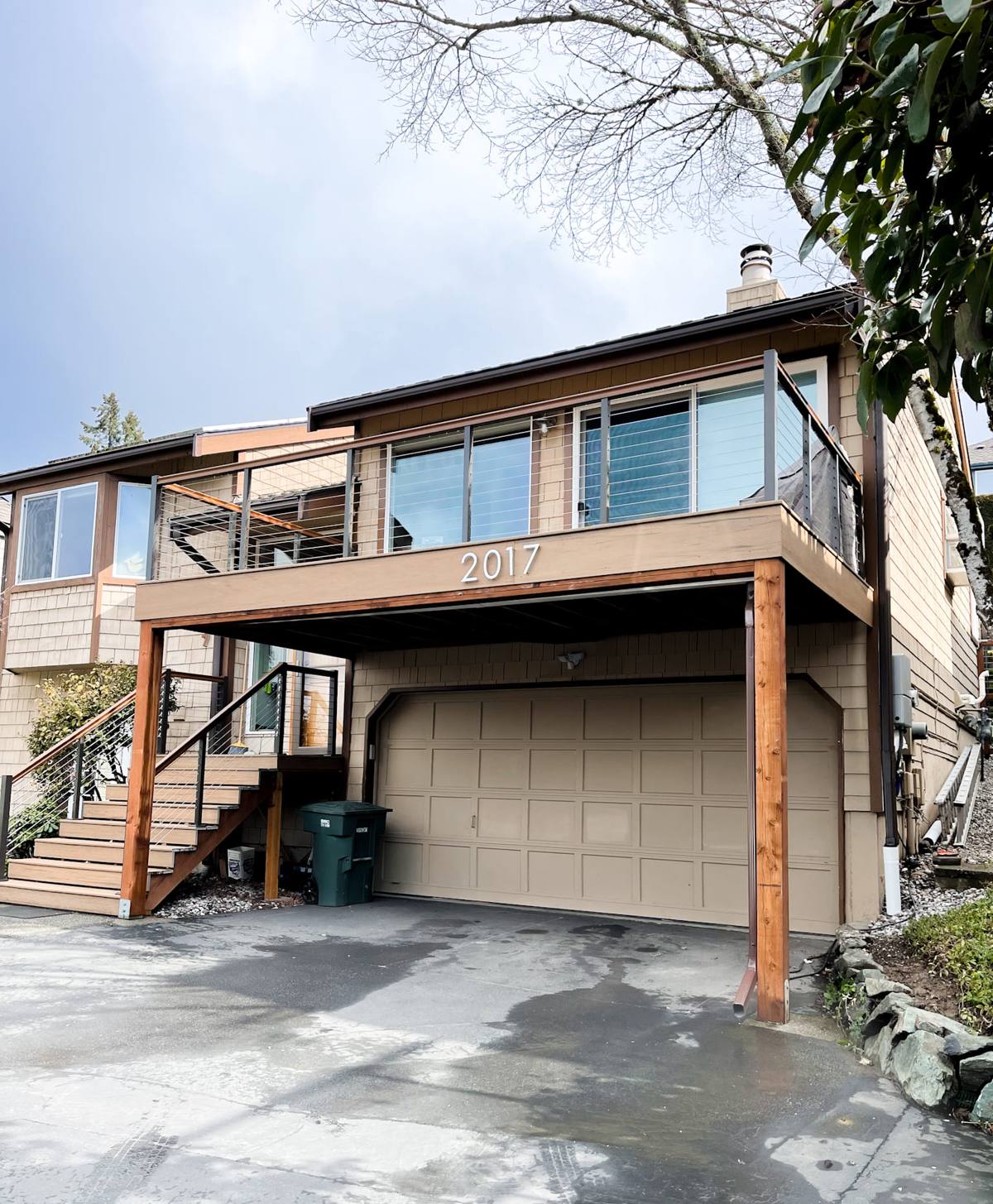
What Sunnyland's Climate Does to a Deck Over Time
Three regional factors do most of the damage to decks in this part of Whatcom County:
- Salt air: Proximity to Bellingham Bay means airborne salt accelerates corrosion on fasteners, brackets, and any exposed metal hardware, especially on decks with any western or bay-facing exposure.
- Driving rain: Wind-driven rain doesn't just fall straight down — it gets pushed sideways into ledger boards, stair stringers, and the undersides of rail posts, which is exactly where builders often skip flashing.
- Long moss season: Shaded, tree-covered lots like many found around Sunnyland stay damp longer after a storm, giving moss and algae a head start. Once moss takes hold on a walking surface, it holds moisture against the wood and becomes a slip hazard.
None of these factors are exotic — they're just constant here in a way they aren't in drier climates, which is why year-round performance matters more than how a deck looks on the day it's finished.
Choosing the Right Decking Material
There's no single "best" decking material for every Sunnyland home — it depends on how much sun and shade the site gets, how much upkeep the homeowner wants to do, and budget. Here's how the common options actually perform under this region's conditions:
| Material | Moisture Behavior | Moss/Algae Resistance | Maintenance | Typical Lifespan Here |
|---|---|---|---|---|
| Pressure-treated wood | Absorbs and releases moisture; prone to cupping if not sealed | Low — needs regular cleaning and re-sealing | Annual cleaning, re-stain/seal every 2-3 years | 15-20 years with upkeep |
| Cedar | Naturally moisture-resistant but still needs sealing on cut ends and surfaces | Moderate — natural oils slow growth early on | Cleaning plus periodic sealing | 15-25 years with upkeep |
| Composite decking | Doesn't absorb water into the board core, but capped boards still need proper airflow underneath | Higher, but not immune — mildew and moss can grow on the surface film if never cleaned | Occasional washing; no sealing/staining | 25-30+ years |
| PVC decking | Fully synthetic, essentially no water absorption into the board | Highest of common options | Occasional washing | 25-30+ years |
Composite and PVC cost more upfront but remove most of the maintenance burden that this climate imposes on wood. Wood costs less initially but only performs well long-term if the homeowner is genuinely willing to clean and reseal it on a schedule — something that's easy to commit to in year one and easy to skip by year four. We'll walk through the honest trade-offs for your specific site rather than push one product line.
A Note on Ground-Contact Rated Lumber
Any wood component that sits close to grade, touches concrete, or is buried — posts, the bottoms of stair stringers — needs ground-contact rated pressure-treated lumber, not the standard above-ground rating. This distinction gets missed on lower-quality builds and is one of the first things that fails when it's wrong.
What's Underneath Matters More Than What's On Top
A deck's walking surface gets all the attention, but the framing and connections underneath determine whether the structure lasts. In a wet climate like Whatcom County's, this is where corners get cut on rushed jobs and where problems hide the longest.
Ledger Board Attachment
The ledger board — where the deck attaches to the house — is the single most common failure point on decks nationally, and wet climates make it worse. Proper flashing (metal flashing plus a water-resistant barrier behind it) has to direct water away from the house framing, not trap it against the ledger. This joint gets checked carefully on every deck we build.
Joist Protection
Joist tape or an equivalent capping product over the tops of joists keeps standing water from soaking into cut lumber where screws and fasteners penetrate the wood. In a region with as much annual rainfall as Whatcom County sees, this is one of the cheapest upgrades that meaningfully extends framing life.
Footings and Post Bases
Footing depth needs to account for local frost depth and soil conditions, and post bases should hold the post itself off the concrete rather than letting it sit in direct contact, which traps moisture at the most vulnerable point of the post.
Hardware and Fasteners for a Salt-Air Environment
Because Sunnyland's proximity to Bellingham Bay means more airborne salt than an inland Whatcom County property, hardware choice deserves real attention rather than defaulting to whatever's cheapest at the yard.
| Hardware Type | Better For This Climate | Why |
|---|---|---|
| Structural connectors (joist hangers, post bases) | Stainless steel or heavy hot-dip galvanized rated for coastal/ACQ lumber exposure | Standard electro-galvanized coatings corrode faster under salt air and treated-lumber chemical exposure |
| Deck screws | Coated or stainless deck-specific screws | Prevents streaking, corrosion, and fastener failure over time |
| Railing hardware | Stainless or marine-grade fasteners at exposed connection points | Rail posts see the most direct wind-driven rain and salt exposure on the whole structure |
Mismatched or bargain hardware is one of the most common causes of premature deck failure we see, and it's also one of the least visible — until a homeowner notices rust streaks bleeding down composite boards or a post connection that's gone soft.
Site Conditions Around Sunnyland
Many lots in this part of Bellingham have mature tree cover, which is part of the neighborhood's character but also means more shade, more falling debris, and slower drying after rain — all of which feed moss growth. A few site-specific factors we account for:
- Orientation and shade pattern of the specific lot, which affects how much moss pressure the deck surface will face year-round
- Drainage slope of the yard, so the deck doesn't sit in a low spot that stays saturated
- Clearance and airflow underneath the deck, which is critical for framing to dry out between storms
- Gutter and downspout placement relative to the deck, since a poorly placed downspout can dump concentrated water right at a post base
Our Deck Building Process
The process we follow is built around getting the moisture-management details right the first time, since correcting them later means tearing into a finished deck.
- On-site assessment: We look at sun/shade exposure, drainage, existing structure (if replacing a deck), and how the space will actually be used.
- Material and layout planning: We walk through decking material trade-offs, railing style, and layout based on your priorities and budget — not a one-size-fits-all package.
- Permitting: We handle the permit application and inspection scheduling required for the project.
- Footings and framing: Footings are set to proper depth, framing uses ground-contact rated lumber where required, and joist protection is installed before decking goes down.
- Flashing and ledger work: Ledger attachment and flashing are completed to keep water away from the house structure.
- Decking, railing, and stairs: Boards are installed with proper spacing for drainage and expansion, railings and stairs are built to code.
- Final walkthrough and inspection: We review the finished deck with you and coordinate any final inspection required by the county or city.
Permits and Code in Whatcom County
Most new deck construction in Bellingham and unincorporated Whatcom County requires a building permit, particularly for decks above a certain height off grade or attached to the house. Requirements can vary depending on your exact jurisdiction within the county, deck size, and height. We handle the permit process as part of the job so homeowners aren't left navigating it alone, and so the finished structure is inspected and documented correctly — which also matters for resale and insurance down the line.
Keeping a Deck in Good Shape Through Whatcom County Winters
Even a well-built deck needs some seasonal attention in this climate. A simple annual routine goes a long way toward preventing the moss buildup and moisture damage that shorten a deck's life here:
- Sweep leaves and debris off the surface regularly through fall, especially on shaded sections
- Clean the deck surface at least once a year to remove early moss and algae growth before it spreads
- Check that gaps between boards remain clear so water can drain through rather than pool
- Inspect the ledger flashing and any visible hardware for rust streaking or corrosion
- Reseal or re-stain wood decking on the schedule appropriate to the product — don't wait until it looks obviously weathered
- Confirm gutters and downspouts near the deck are clear and directing water away from posts and footings
- Trim back overhanging branches where practical to improve sun exposure and airflow
Why a Crew That Knows This Area Matters
A deck built to generic specifications can look identical to a properly built one on installation day — the difference shows up two, five, or ten years later, in the form of soft framing, corroded hardware, or a surface that stays green through half the year. Building for Sunnyland specifically means treating Whatcom County's rain totals, salt air, and shade patterns as design inputs from the start, not problems to deal with after the fact. A crew that already works in this part of Bellingham has seen which details actually matter here and which corners simply can't be cut.
If you're planning a new deck or replacing an aging one in Sunnyland, we're happy to take a look at your property and talk through honest options for your site, budget, and how you plan to use the space. Reach out using the form below for a free, no-pressure estimate.