 Whatcom County
 Why Window Installation in Lynden Is Different From a Catalog Job
Lynden sits in a part of Whatcom County where the weather doesn't do anything in half measures. Winters bring long stretches of driving rain pushed in off the Strait, summers are mild but damp, and the moss season stretches longer here than it does almost anywhere else in the state. A window that's a great fit for a dry inland climate can be the wrong choice here, and a window that's installed correctly on paper but sealed poorly in practice will let water find its way into the wall assembly within a few seasons. Window installation in this area isn't just about picking a style and a color — it's about managing water, air, and moisture the whole year round.
We work on homes throughout Lynden and the rest of Whatcom County, and the patterns repeat: failed caulk lines, flashing that was never lapped correctly, and old aluminum-frame windows that condensate and fog because they were never built to hold back the kind of sustained rain and salt-laden air this region sees. A correct install accounts for all of that from the first cut.
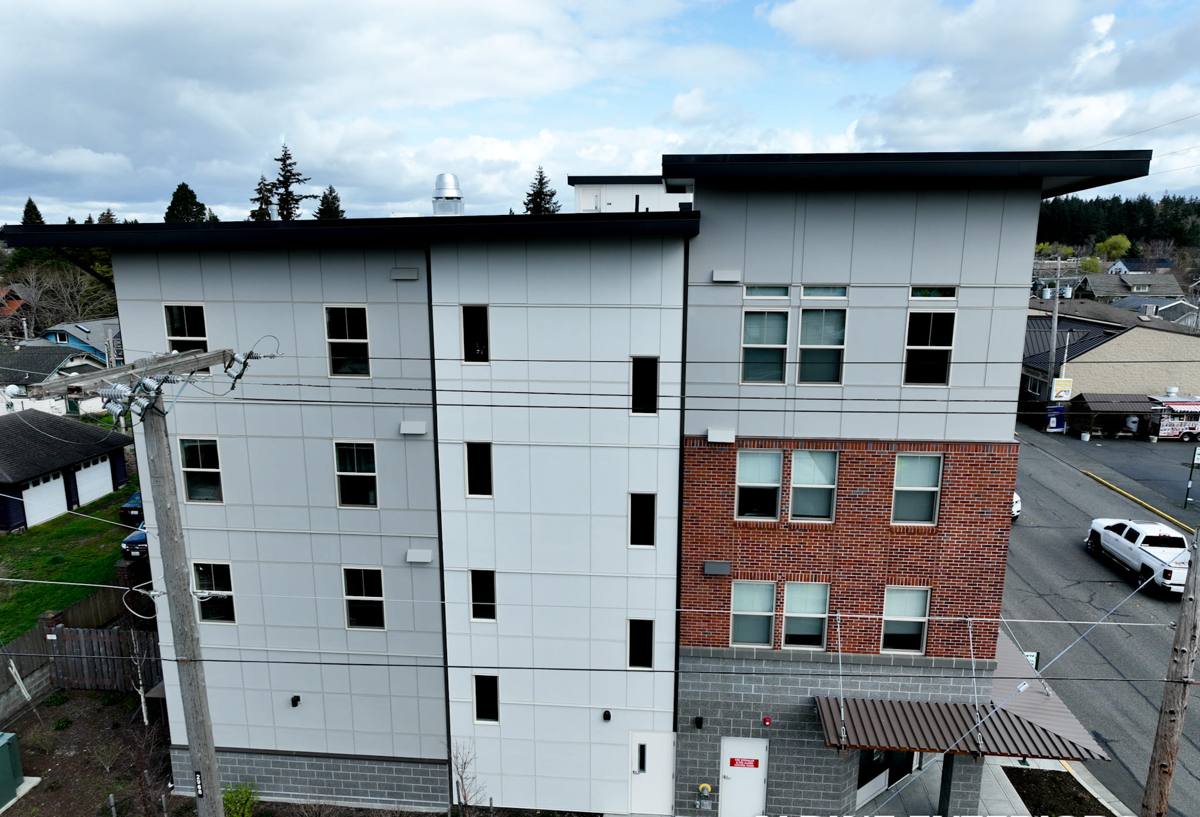
What Salt Air, Driving Rain, and Moss Season Do to Windows Here
Salt Air and Metal Fatigue
Homes closer to the water pick up salt-laden air that accelerates corrosion on metal hardware, screws, and older aluminum frames. Over years, that corrosion works its way into hinges, cranks, and locking mechanisms, which is why windows in this area often feel "stuck" or hard to operate well before the glass itself fails.
Driving Rain and Wind-Driven Water
Rain here doesn't just fall — it's frequently pushed sideways by wind, which means it tests every seam, joint, and flashing detail a window has. A window that would perform fine in a calm-weather climate can leak in Whatcom County if the flashing and sill pan weren't detailed for wind-driven water specifically.
Moss, Algae, and Prolonged Moisture
The long damp season means moss and algae get a foothold on any surface that stays wet, including window sills, trim, and frames. Beyond the cosmetic issue, sustained moisture against wood trim or an improperly sealed frame is exactly the condition that leads to rot and hidden water intrusion behind the wall.
Signs a Lynden Home Needs Window Installation, Not Just Repair
Not every window problem calls for full replacement. But there's a point where patching stops making sense and a proper installation becomes the more honest answer. Common signs we see on Whatcom County homes:
- Fogging or a permanent haze between panes — the seal has failed and the insulating gas is gone
- Frames that are soft, spongy, or visibly rotting at the corners or sill
- Windows that won't stay open, won't latch, or have become difficult to operate
- Visible daylight or a draft at the frame edge when the window is closed
- Paint or finish that keeps failing in the same spot no matter how often it's touched up
- Moss or dark staining building up on the sill or lower frame season after season
- Noticeably higher heating bills with no other explanation
If you're only seeing one of these and the rest of the window is sound, repair may still be worth it. Once two or three show up together, it's usually a sign the window's ability to manage water and air has broken down at a structural level.
What a Correct Window Installation Actually Involves
Water Management Comes First
Before a new window ever goes in, the opening needs a sill pan that directs any water that gets past the window back outside, not into the wall framing. Flashing tape gets integrated with the home's weather-resistive barrier in the correct shingled order — each layer lapping over the one below it — so water is always directed downward and outward, never trapped behind the siding.
Air Sealing and Insulation
The gap between the window frame and the rough opening needs to be sealed and insulated, not just caulked around the outside trim. A bead of caulk on the surface can look finished while leaving an uninsulated, unsealed gap underneath — which shows up later as a draft or a cold spot on the wall.
Fastening and Structural Fit
Windows need to be shimmed level, plumb, and square, then fastened per the manufacturer's specification — not just however many screws happen to hold it in place. An out-of-square window puts ongoing stress on the frame and hardware, which is often why windows that were installed carelessly start failing years before they should.
Interior and Exterior Finish Work
Once the window is set and sealed, the interior and exterior trim needs to be finished in a way that sheds water on the outside and looks clean on the inside — with attention paid to any wood trim that will be exposed to this area's damp season.
Choosing the Right Window for Whatcom County's Climate
There's no single "best" window brand for every home — the right choice depends on your home's exposure, your budget, and how much upkeep you want to take on. Here's how the common frame materials compare for a climate like this one:
| Frame Material | How It Handles This Climate | Maintenance | General Cost Position |
|---|---|---|---|
| Vinyl | Won't corrode from salt air, handles moisture well, good insulating value | Low — occasional cleaning | Most affordable |
| Fiberglass | Very stable in wet, temperature-swinging conditions; strong resistance to warping | Low | Mid to upper range |
| Wood (clad exterior) | Good insulator, classic look, but exterior cladding needs to be intact to protect the wood core from this area's rain | Higher — finish and seals need periodic attention | Upper range |
| Aluminum | Prone to corrosion in salt air and conducts cold, leading to condensation in a damp climate | Moderate to high | Varies |
For most Lynden homes, we steer people toward vinyl or fiberglass because they hold up to sustained moisture and salt air with the least ongoing maintenance. Wood-clad windows can still be the right call for a specific look, as long as the homeowner understands the maintenance commitment that comes with it. We're honest about that trade-off up front rather than after the sale.
Glass and Glazing
Double-pane windows with a low-E coating and argon fill are a solid baseline for this region's mild-but-damp climate. Triple-pane adds cost and weight for a modest additional insulation gain — it's worth discussing case by case, but it's rarely a must-have for a typical Lynden home the way it might be in a colder inland climate.
Our Installation Process
- On-site assessment. We look at your existing windows, the condition of the rough openings, and any signs of past water intrusion before recommending anything.
- Product selection. We walk through frame material, glass package, and style options based on your home's exposure and your budget — no upselling to a product your home doesn't need.
- Careful removal. Old windows come out without damaging the surrounding framing, and we check the opening for hidden rot or moisture damage before moving forward.
- Sill pan and flashing. Water management goes in first, correctly lapped and integrated with the existing weather barrier.
- Setting the window. Shimmed level and plumb, fastened to spec, and sealed with attention to both the interior air seal and the exterior water seal.
- Trim and finish. Interior and exterior trim is completed cleanly, with exterior details built to shed water rather than trap it.
- Final walkthrough. We check operation, seals, and finish with you before calling the job done.
Cost Factors for Window Installation in Lynden
Every home is different, so we don't quote firm numbers without seeing the job — but the main variables that move the price are consistent:
| Factor | Why It Matters |
|---|---|
| Number and size of windows | More openings and larger glass area increase material and labor |
| Frame material chosen | Vinyl is typically most affordable; fiberglass and wood-clad cost more |
| Condition of the existing opening | Hidden rot or water damage found during removal adds repair work before the new window can go in |
| New construction vs. replacement | Replacing into an existing opening is usually less involved than a new or resized opening |
| Access and second-story work | Harder-to-reach windows take more time and equipment |
Why It Matters to Hire a Crew That Already Works Whatcom County
A window installer who mostly works other regions can still do competent work, but they may not build in the specific water-management details this area demands — because their usual jobs don't punish a shortcut the way a Whatcom County winter will. A crew that regularly installs windows in Lynden and the surrounding county already knows how wind-driven rain moves against a wall, how long moss season really lasts, and which details matter most when a home sits closer to salt air. That local pattern recognition shows up in fewer callbacks and windows that are still performing well years down the road.
Maintaining New Windows Through Whatcom County's Wet Season
A correctly installed window still benefits from basic upkeep in this climate. Rinse sills and tracks periodically to keep moss and algae from taking hold, check that weep holes stay clear so water can drain out rather than pool, and take a look at exterior caulk lines once a year for any cracking or separation. None of this is heavy maintenance — it's the kind of five-minute check that keeps a well-installed window performing the way it should for the long haul.
If your windows are showing their age, or you're planning ahead for a remodel, we're happy to take a look and give you a straight, no-pressure assessment of what your home actually needs. Use the form below to request a free estimate.