 Whatcom County
 Why Blaine's Marine Climate Is Hard on Windows
Blaine sits at the northwest corner of Whatcom County, right on the water, which means every window on the west and north sides of a house takes a beating that inland homes never see. Salt-laden air off the bay works on metal hardware, frame fasteners, and aluminum components year-round, not just during storms. Add in driving, wind-blown rain that hits horizontally instead of falling straight down, and any weak point in a window's seal or flashing becomes a path for water to get behind the wall, not just onto the glass.
Then there's the moss season, which around here runs long — often eight months or more of damp, shaded, low-sun conditions that keep wood trim, sills, and siding wet far longer than a drier climate would. Moss and algae hold moisture against surfaces, and wood that stays wet for weeks at a time eventually softens and rots, whether that's a window sill, a piece of trim, or the framing hidden behind it. None of this means windows in Blaine fail faster than everywhere else — it means they need to be installed and sealed correctly for these specific conditions, or the clock on failure starts a lot sooner.
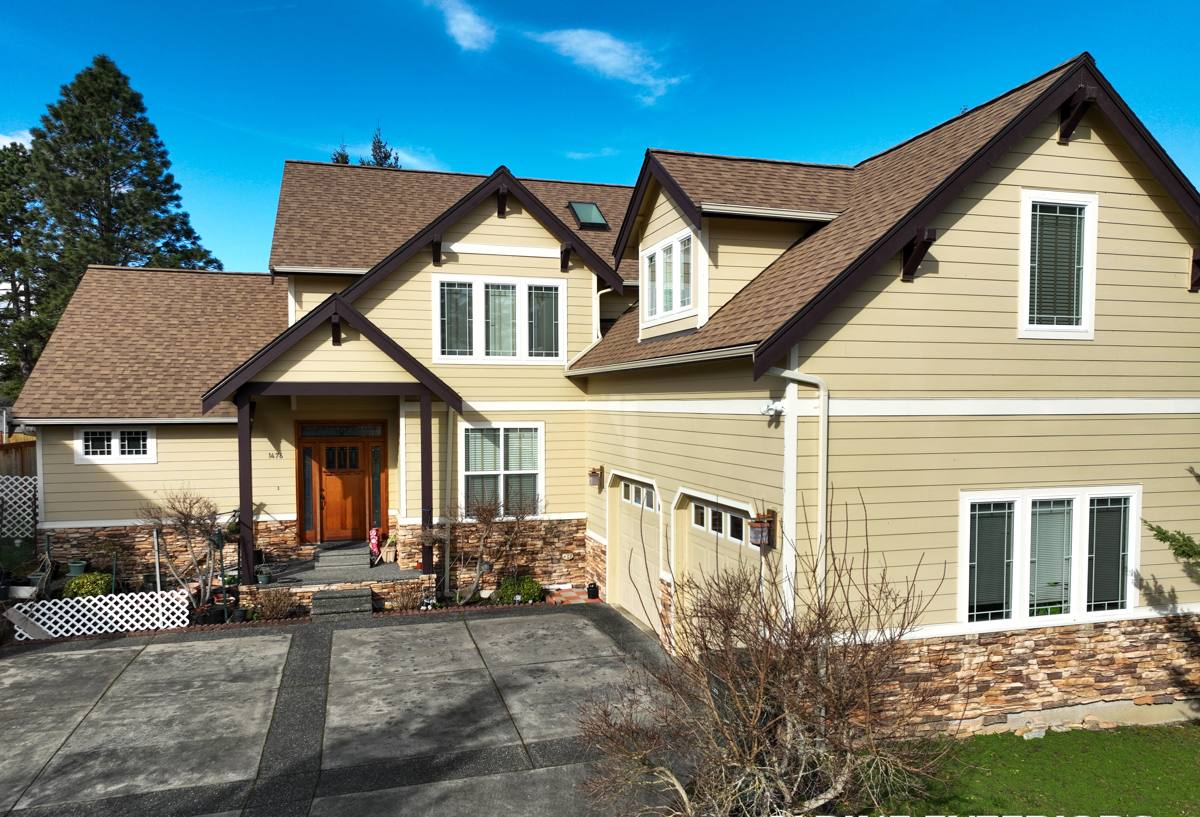
Signs a Blaine Home Needs Window Replacement
Most homeowners don't notice window failure until it's obvious — a draft, a foggy pane, a window that won't stay open. By the time those symptoms show up, the underlying problem has usually been developing for a while. Here's what we look for, and what you can check yourself:
- Fogging or a milky haze between panes of double-pane glass — this means the seal has failed and the insulating gas or dry air has been replaced by moisture
- Soft, spongy, or visibly rotted wood at the sill, jamb, or surrounding trim
- Noticeable drafts near the frame even when the window is fully latched
- Windows that stick, won't stay open on their own, or are difficult to lock
- Interior condensation or frost on the glass during cold, wet stretches
- Corrosion, pitting, or a chalky white residue on aluminum frames or hardware
- Paint that's peeling, bubbling, or blistering around the window opening
- Single-pane glass anywhere in the house — original to many older Whatcom County homes and offering very little insulation
- A noticeable jump in heating costs with no other explanation
What a Correct Window Replacement Job Involves
Removal and Inspection
Pulling the old window is the easy part. What matters is what happens next: inspecting the framing and sheathing underneath for hidden water damage. In a coastal climate like Blaine's, it's common to find soft or discolored wood around a window opening that looked fine from the outside. Any rot found here needs to be cut out and repaired before a new window goes in — installing a new window into a compromised opening just hides the problem for a few more years instead of solving it.
Flashing and Water Management
This is the step that separates a window that lasts decades from one that leaks within a few years. A proper installation includes a sloped sill pan so any water that gets past the glass drains back outside instead of pooling in the frame, and flashing tape or membrane integrated with the house's weather-resistive barrier in the correct shingle-lap order — each layer overlapping the one below it so water is always shed outward and downward. Skipping or rushing this step is the single most common cause of window-related water damage we see in older homes near the water.
Sealing and Insulation
Around the frame, gaps get filled with low-expansion foam or backer rod rather than packed solid, which would bow the frame and affect operation. Exterior joints get a compatible sealant as a second line of defense — never the only line of defense. Caulk alone, without flashing behind it, will eventually fail; it's meant to shed surface water, not stop water that's already found its way behind the trim.
Choosing the Right Frame Material for Coastal Whatcom County
There's no single "best" window material for every home, but some hold up better than others against salt air, sustained moisture, and long gray winters. Here's how the common options compare for a home in Blaine's conditions:
| Frame Material | Salt Air / Moisture Resistance | Maintenance | Best Fit |
|---|---|---|---|
| Vinyl | Good — won't corrode or rot, seams are the main watch point | Low | Most homes on a value-conscious budget |
| Fiberglass | Very good — dimensionally stable, resists warping | Low | Homes with heavy sun/wind exposure or larger openings |
| Wood-clad | Fair — exterior cladding protects wood, but cut ends and joints need attention | Moderate to high | Homes prioritizing a traditional interior wood look |
| Bare Aluminum | Poor near saltwater — prone to pitting/corrosion and conducts cold, inviting condensation | Moderate | Generally not our recommendation this close to the water |
On bare aluminum specifically: it's a fine product in the right setting, but our professional standard for homes this close to Semiahmoo Bay is to steer clients toward vinyl or fiberglass, because the ongoing maintenance and earlier hardware failure we see on aluminum in salt air isn't worth the upfront savings for most homeowners.
Glass and Energy Performance for a Cool, Damp Climate
Pane Count and Gas Fills
Double-pane glass with an argon gas fill is the standard upgrade from older single-pane windows and is sufficient for most rooms. On walls that take the brunt of the wind and rain — typically west- and north-facing exposures in Blaine — triple-pane glass is worth considering for the extra insulation and sound dampening, especially on a home near the water where wind noise is a real factor.
Low-E Coatings and Condensation Control
Low-E coatings are a microscopically thin layer that reflects heat back into the room rather than letting it escape through the glass. In a climate like ours, with long stretches of damp, overcast weather and mild summers, the priority is a low U-factor (how well the window retains heat) more than aggressive solar heat gain control, which matters more in hot, sunny climates. A good Low-E package also helps reduce interior condensation on cold mornings, which matters in a county where indoor humidity tends to run higher than drier parts of the state.
Cost Factors for Window Replacement in Blaine
Every home is different, but the same handful of factors drive most of the cost variation we see on window projects in this area:
| Factor | Why It Affects Cost |
|---|---|
| Frame material | Vinyl is generally the most affordable; fiberglass and wood-clad cost more upfront |
| Window size and style | Large picture windows or complex shapes cost more than standard double-hung sizes |
| Number of windows | Per-window pricing typically drops somewhat on whole-house projects |
| Hidden rot or framing repair | Discovered damage at tear-out adds labor and material not visible in an initial quote |
| Access and removal difficulty | Upper-story, oversized, or hard-to-reach windows take more time and equipment |
| Glass upgrades | Triple-pane, upgraded Low-E packages, or tempered/safety glass add cost per unit |
As a rough guide, straightforward single window replacements on an easily accessible wall often land in the low-to-mid four figures installed, with larger or more complex windows running higher. We'll never guess at a number over the phone — every quote is based on an actual look at your windows and openings.
Our Window Replacement Process
We keep the process straightforward and try to minimize disruption to your home:
- Free on-site assessment — we look at every window being considered, check for hidden moisture or rot, and talk through material and glass options
- Accurate measurement and ordering — correct sizing avoids delays and gaps that lead to callbacks
- Interior and landscaping protection — drop cloths and care around your belongings and plantings before work starts
- Careful removal — old windows and any surrounding damaged material come out cleanly
- Framing inspection and repair — any rot or damage found gets addressed before the new window goes in, not after
- Installation with proper flashing and sealing — sill pan, house wrap integration, shimming, and insulation done to hold up against Blaine's weather
- Interior and exterior trim finishing — tying the new window into existing trim and siding cleanly
- Cleanup and walkthrough — we remove debris and walk you through the finished work before we consider the job done
Window Replacement and Siding: Why Timing Matters
If your home is due for siding repair or replacement around the same time as your windows, it's worth doing both together. Replacing windows first, then cutting new siding around old flashing later, means patching two separate water-management systems instead of building one continuous one. When windows and siding go in as part of the same project, the weather-resistive barrier, window flashing, and siding overlap can all be integrated in the correct order the first time — which is the single best defense against the kind of slow, hidden water intrusion that driving coastal rain is so good at finding.
Even if a full siding replacement isn't in the plan, we coordinate window work with whatever trim and siding repair is needed immediately around the opening, so you're not left with a mismatched patch that becomes its own future problem.
Why Hire a Crew That Already Works Blaine
Window installation isn't identical everywhere. A crew that regularly works homes along this stretch of Whatcom County knows which walls take the worst of the wind and driving rain, understands how long the moss season here actually runs and how that affects scheduling exterior work, and has seen firsthand which frame materials and details hold up over years near saltwater versus which ones look fine on a spec sheet but corrode or fail early. That local track record matters more than a manufacturer's brochure claims. It also means we're nearby if a question comes up after the job is done — not a crew that drove in from out of the area and won't be back.
If your windows are showing their age, or you're planning ahead for a siding project and want windows handled at the same time, we're happy to take a look. Reach out for a free, no-pressure estimate — the form below is the fastest way to get started.